

The fastest ways to lower your heating bill this winter are free: turn the thermostat down 7 to 10 degrees while you sleep or are out, close drafty gaps, open sunny curtains by day and close them at night, and keep vents clear. Then add cheap fixes like weatherstripping and a clean furnace filter. Together, these can trim a real chunk off your winter bills without buying a new furnace.
Here’s why it matters this year. The U.S. Energy Information Administration expects winter heating bills to move in very different directions depending on your fuel, with heating oil up about 21% and electric bills up about 4% compared with last winter. If you heat with either one, every degree counts.
Below you’ll find 15 proven ways to cut heating costs, sorted from free to bigger upgrades, plus a quick table showing what each one costs and how much effort it takes.
🔥 Quick Answer: How to Lower Your Heating Bill
- Free: set back the thermostat 7–10°F for 8 hours a day, use the sun, close the fireplace damper, keep vents clear.
- Under $50: weatherstripping, caulk, door sweeps, a new furnace filter, outlet gaskets.
- Bigger wins: a smart or programmable thermostat, attic insulation, a furnace tune-up.
- Need help paying? Ask your utility about budget billing and check LIHEAP and the Weatherization Assistance Program.
In this guide
What Heating Will Cost This Winter
Your bill depends mostly on two things: the fuel you heat with and how cold your winter is. EIA’s 2026–27 Winter Fuels Outlook, published October 7, 2026, forecasts these changes in household heating spending versus last winter:
| Heating fuel | Forecast change vs last winter | Who uses it |
|---|---|---|
| 🔥 Natural gas | About 9% lower | Together with propane, about half of U.S. homes |
| 🛢️ Propane | About 3% lower | Mostly rural homes |
| ⚡ Electricity | About 4% higher | More than 40% of U.S. homes |
| 🛢️ Heating oil | About 21% higher | About 3% of homes, mostly in the Northeast |
Source: U.S. Energy Information Administration, Winter Fuels Outlook (October 2026). Actual bills depend on your weather and local prices.
In dollars, AARP reports that the National Energy Assistance Directors Association expects the average household heating cost to be about $1,030 this winter, up 8.7%. For a full picture of your monthly utilities, see our guide to how much it costs to run a house per month.
That’s the bill. Now let’s shrink it, starting with the changes that cost nothing.
Free Ways to Lower Your Heating Bill
1. Turn the thermostat back while you sleep or are away
This is the single biggest free win. The U.S. Department of Energy says you can save as much as 10% a year on heating and cooling by turning your thermostat back 7 to 10°F for 8 hours a day. A common setup is 68°F while you’re home and awake, and lower when you’re asleep or at work.
Picture a family in Ohio. They set 68°F from 6 a.m. to 10 p.m. and drop to 60°F overnight under good blankets. They don’t notice it while asleep, and the furnace runs far less from midnight to dawn.
2. Let the sun do some heating
Open south-facing curtains and blinds on sunny days, then close them at dusk. AARP, citing DOE, notes that drapes can prevent up to 10% of a warm room’s heat loss. Heavy or lined curtains work best. Our guide on how to choose curtains covers fabric and length.

3. Close the fireplace damper
An open damper is like an open window straight up the chimney. Keep it shut whenever there’s no fire. And when a fire is burning, turn the thermostat down, since a fireplace can pull warm room air up the flue.
4. Keep vents and radiators clear
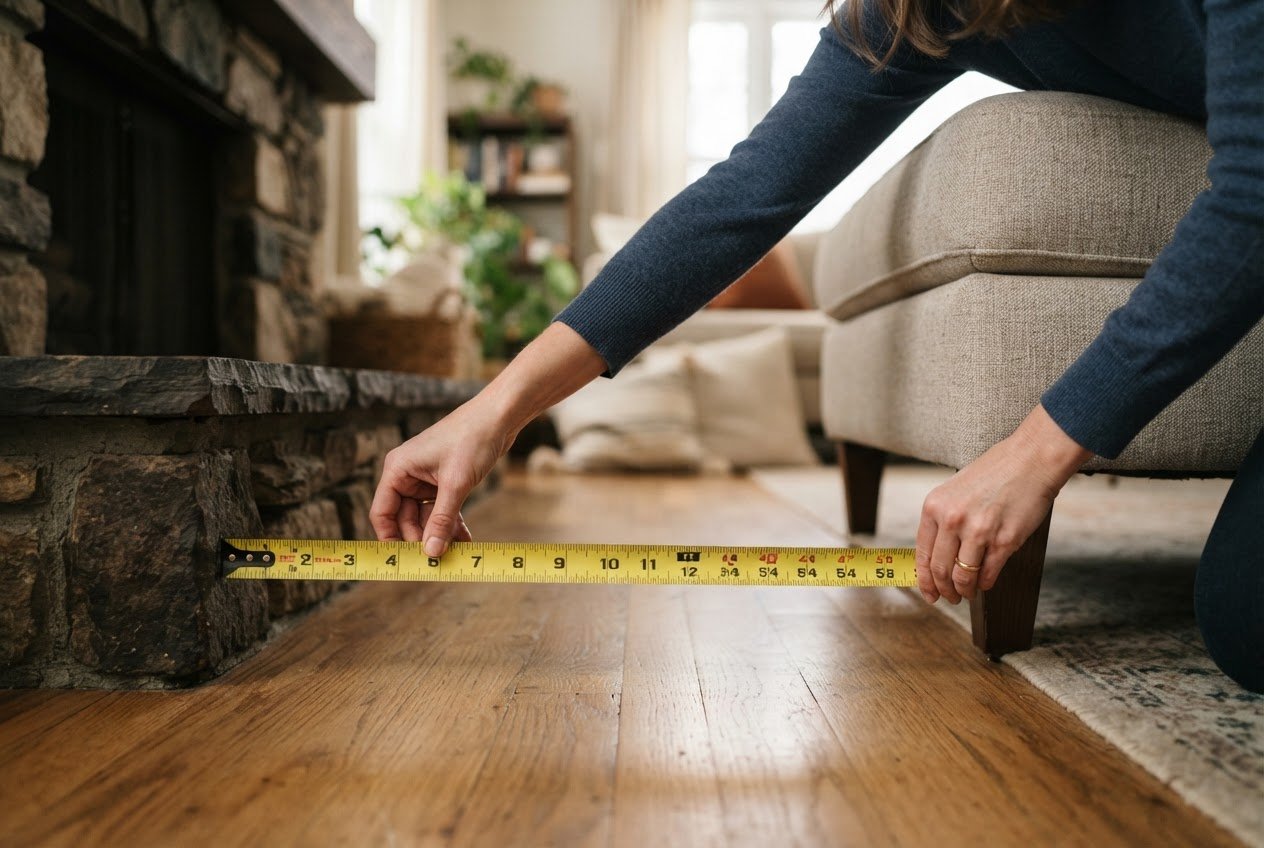
A sofa pushed over a floor vent or a long curtain draped over a radiator traps heat where you can’t feel it. Give every vent a few inches of breathing room. While you’re at it, check that furniture also sits a safe distance from any heat source. Our fireplace clearance guide has the numbers.
5. Run ceiling fans clockwise on low
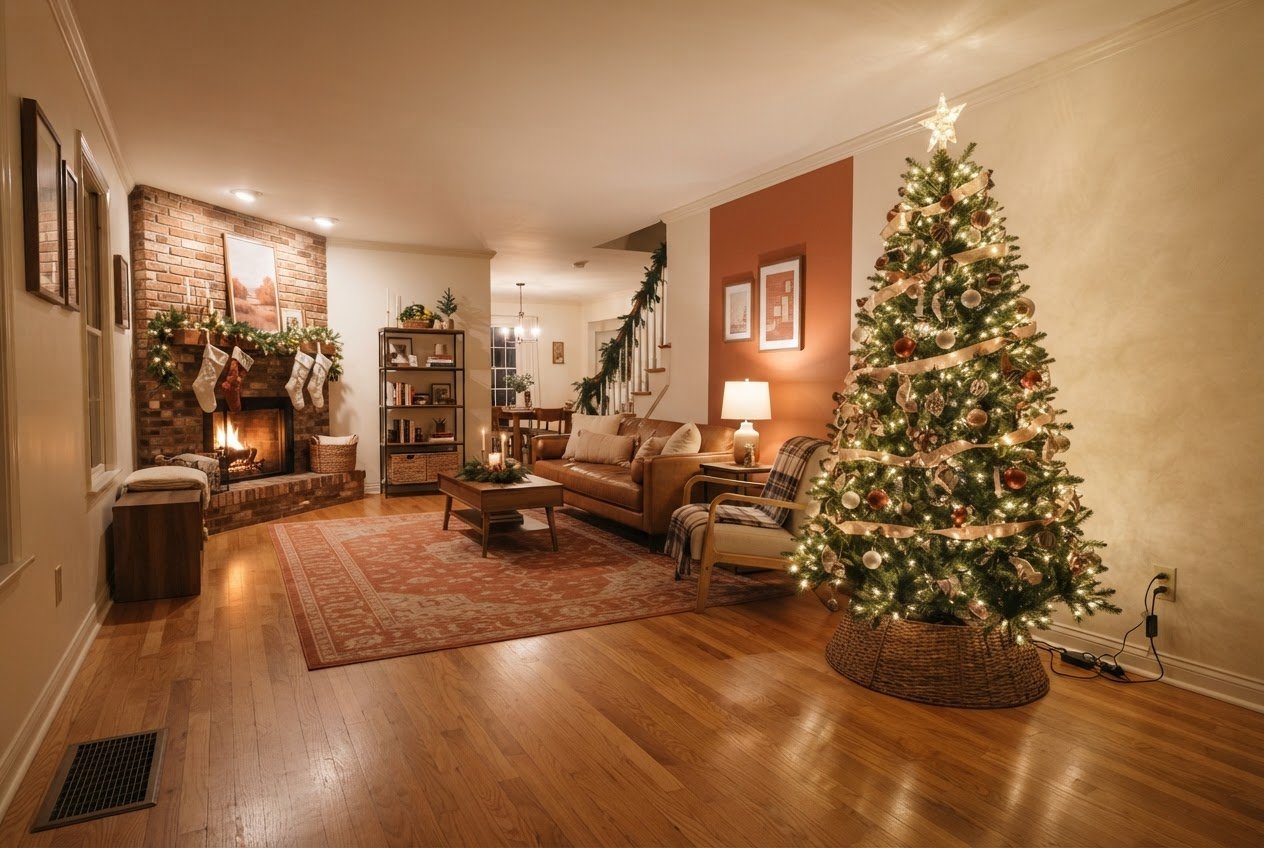
Warm air rises and sits at the ceiling. A ceiling fan set to spin clockwise on low gently pushes it back down without a chilly breeze. Turn it off when you leave the room.
6. Close doors to rooms you don’t use
Heating a guest room nobody sleeps in is money gone. Close the door. If you have a forced-air system, don’t shut more than a couple of vents, though, because closing too many can strain some systems. Ask your HVAC tech what’s safe for yours.
7. Dress the house and yourself for winter
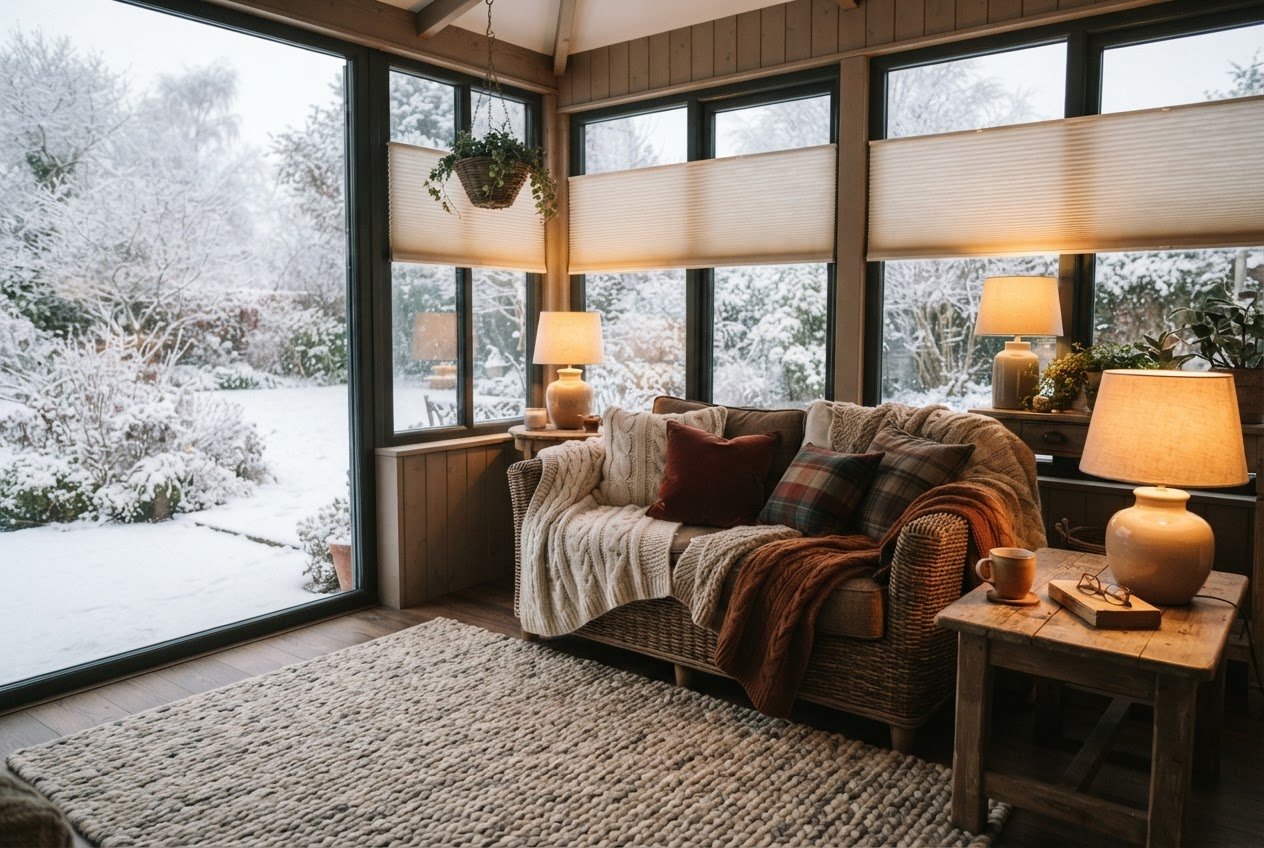
Thick rugs on bare floors, throws on the couch, flannel sheets and warm socks all let you feel cozy at a lower thermostat setting. It sounds simple, and it is. That’s the point.
Free fixes get you started. A few dollars more stops the leaks that quietly drain your bill all season.
Cheap Fixes Under $50
8. Weatherstrip doors and windows
Feel for drafts on a windy day, or hold a lit incense stick near the edges of doors and windows and watch the smoke. Wherever it wavers, add self-adhesive foam or V-strip weatherstripping. Energy Star says sealing air leaks and adding insulation can provide up to a 10% savings on your annual energy bills.
9. Caulk gaps and add door sweeps
Caulk cracks around window trim and where pipes and wires enter the house. A door sweep closes the gap under exterior doors, which is often wide enough to slide a pencil under.
10. Change or clean your furnace filter
A clogged filter makes your furnace work harder for the same heat. Energy Star’s maintenance checklist says to inspect, clean or change filters once a month during heavy use.
11. Add foam gaskets behind outlet covers
Outlets and switches on exterior walls leak cold air. Foam gaskets go on in seconds with a screwdriver and are among the cheapest fixes in any hardware store.
12. Insulate your water heater pipes
Foam pipe sleeves on the first few feet of hot water pipe cut heat loss on the way to your faucet. Keep the water heater itself at no lower than 120°F, which AARP notes helps limit Legionella growth.
Bigger Upgrades That Pay Back
13. Install a programmable or smart thermostat
If you forget to turn the heat down, let the thermostat do it. A smart or programmable model runs your setback schedule automatically, so you actually get that 10%. Many utilities offer rebates, so check yours before you buy.
14. Tune up your furnace or heat pump
An annual tune-up by a qualified technician keeps the system running efficiently and catches problems before they turn into a January breakdown. It’s also a good time to make sure your carbon monoxide detectors work.
15. Seal and insulate the attic
The attic is where a lot of warm air escapes. Sealing gaps around light fixtures, the attic hatch and plumbing vents, then topping up insulation, is often the biggest long-term win. A home energy audit will show you exactly where your house leaks. Ask your utility first, since many offer free or discounted audits.
All 15 Ways Compared
Here’s everything in one place, so you can pick your weekend project.
| # | Fix | Upfront cost | Effort | Best for |
|---|---|---|---|---|
| 1 | Thermostat setback 7–10°F, 8 hrs | Free | ⭐ | Everyone |
| 2 | Use sun by day, curtains at night | Free | ⭐ | Homes with south-facing windows |
| 3 | Close fireplace damper | Free | ⭐ | Homes with fireplaces |
| 4 | Clear vents and radiators | Free | ⭐ | Everyone |
| 5 | Ceiling fans clockwise on low | Free | ⭐ | High ceilings |
| 6 | Close unused rooms | Free | ⭐ | Larger homes |
| 7 | Rugs, throws, warmer bedding | Free to low | ⭐ | Bare floors, chilly bedrooms |
| 8 | Weatherstripping | Low | ⭐⭐ | Drafty doors and windows |
| 9 | Caulk and door sweeps | Low | ⭐⭐ | Older homes |
| 10 | New furnace filter | Low | ⭐ | Forced-air systems |
| 11 | Outlet gaskets | Low | ⭐ | Exterior walls |
| 12 | Hot water pipe insulation | Low | ⭐⭐ | Exposed pipes |
| 13 | Smart or programmable thermostat | Medium | ⭐⭐ | Busy schedules |
| 14 | Annual furnace tune-up | Medium | ⭐ (hire out) | Systems not serviced in a year |
| 15 | Attic air sealing and insulation | Higher | ⭐⭐⭐ | Homes with thin attic insulation |
Effort: ⭐ = minutes, ⭐⭐ = an afternoon, ⭐⭐⭐ = a weekend or a pro. Savings depend on your home, climate and fuel.
Space Heaters: When They Save and When They Don’t
A space heater can save money in one situation: you heat one small room you’re sitting in and turn the main thermostat down for the rest of the house. If you run a space heater while the furnace still heats every room, you’re paying twice.
Safety comes first, though. The U.S. Fire Administration says to keep anything that can burn at least 3 feet from space heaters and to turn them off when you leave the room or go to bed. It also reports that portable heaters were involved in only 3% of home heating fires but 41% of fatal heating fires in 2017–2019.
✅ Space heater safety checklist
- ☐ 3 feet of clear space on all sides
- ☐ Plugged straight into the wall, no extension cords
- ☐ Off when you leave the room or go to sleep
- ☐ Tip-over and overheat shutoff
- ☐ Working smoke and carbon monoxide alarms nearby
Help Paying Your Heating Bill
If your bill is already more than you can handle, you have options:
- Call your utility. Ask about budget billing, which spreads costs evenly over the year, and payment plans or hardship funds.
- LIHEAP. The federal Low Income Home Energy Assistance Program helps eligible households pay heating bills. Funds can run out, so apply early.
- Weatherization Assistance Program. The Department of Energy’s Weatherization Assistance Program provides free energy upgrades for eligible lower-income households.
Mistakes That Raise Your Bill
- Cranking the thermostat to 80°F to “heat faster.” It won’t. Most systems heat at the same speed no matter the setting.
- Leaving the fireplace damper open. It vents warm air all day.
- Ignoring the filter. A dirty filter forces longer run times.
- Blocking vents with furniture or curtains.
- Running a space heater with the whole-house heat still on.
- Skipping maintenance until the furnace quits in a cold snap.
- Letting indoor air get too dry. Very dry air can make a room feel cooler. Our guide to air purifiers vs humidifiers vs dehumidifiers explains when a humidifier helps.
Frequently Asked Questions
What temperature should I set my thermostat to in winter to save money?
A common target is about 68°F while you’re home and awake, then 7 to 10°F lower while you sleep or are away. The Department of Energy says that setback for about 8 hours a day can save as much as 10% a year on heating and cooling.
Is it cheaper to leave the heat on all day or turn it down?
Turning it down usually costs less. A home loses heat more slowly when it’s cooler inside, so lowering the setting while you’re away or asleep saves energy even after the system warms the house back up.
Do space heaters save money?
Only if you heat a single small room and turn the main thermostat down for the rest of the house. Keep anything that can burn 3 feet away, plug it directly into the wall and turn it off when you leave the room.
How much can weatherstripping save on heating?
Energy Star says sealing air leaks and adding insulation can save up to 10% on annual energy bills. Weatherstripping is one of the cheapest ways to start.
How often should I change my furnace filter?
Energy Star recommends inspecting, cleaning or changing it once a month during heavy use. Homes with pets or dust may need more frequent changes.
Where can I get help paying my heating bill?
Start with your utility for budget billing and payment plans. Then look at LIHEAP for bill help and the Weatherization Assistance Program for free energy upgrades if you qualify.
The Bottom Line
You don’t need a new furnace to lower your heating bill this winter. Start tonight with a thermostat setback and closed curtains, spend one Saturday sealing drafts and changing the filter, and keep your vents clear. If you have the budget, a smart thermostat and attic sealing keep paying you back for years. Small steps, stacked together, add up to a noticeably smaller bill by February.
Keep learning: more home guides from Dream Home Heaven
- How much does it cost to run a house per month? Utility costs by state
- How to choose curtains: size, length and fabric guide
- How far should furniture be from a fireplace?
- How to prepare a sunroom and indoor patio furniture for winter
Sources: U.S. Energy Information Administration Winter Fuels Outlook (October 2026); U.S. Department of Energy; ENERGY STAR; U.S. Fire Administration; AARP citing the National Energy Assistance Directors Association; U.S. Department of Health and Human Services (LIHEAP). Updated November 2026.
What’s the one change that lowered your heating bill the most? Share it in the comments.