Md Soriful Islam

Air Purifier vs Humidifier vs Dehumidifier: Which Do You Need?

These three appliances solve completely different problems. Use EPA humidity guidance and a $10 hygrometer to figure out which one your home needs. Air Purifier vs Humidifier vs Dehumidifier: Which One Do You Actually Need? These three appliances get shelved next to each other, priced similarly, and marketed with overlapping language about “healthier air.” They also solve three entirely different problems, and buying the wrong one is a common and expensive mistake — an air purifier will not stop mold growing behind your bathroom tile, and a dehumidifier will not remove pollen from your living room. The good news is that determining which one you need requires no guesswork at all. A $10 device gives you a definitive answer in about thirty seconds. This guide explains what each appliance actually does, how to diagnose your specific problem, what the EPA guidance says about indoor humidity, and the honest cases where you need two of these — or none. The Thirty-Second Version Appliance What It Removes or Adds Solves Air purifier Removes airborne particles: dust, pollen, pet dander, smoke, some odors Allergies, asthma triggers, smoke, general particulate pollution Humidifier Adds moisture to air Dry air below 30% RH: dry skin, irritated nasal passages, scratchy throat Dehumidifier Removes moisture from air High humidity above 50–60% RH: mold conditions, dust mites, musty odors, dampness Buy this first, before any appliance A hygrometer costs roughly $10 at any hardware store and measures your home’s relative humidity in about thirty seconds. It tells you definitively whether you have a humidity problem at all, and in which direction. Buying a humidifier or dehumidifier without measuring first is guessing at a problem you can simply measure.   The Number That Decides Two of the Three The EPA recommends keeping indoor relative humidity between 30 and 50 percent. This single range resolves the humidifier-versus-dehumidifier question entirely. Your Hygrometer Reads Diagnosis Action Below 30% Air is too dry Humidifier 30–50% Within EPA-recommended range Neither — you do not have a humidity problem Above 50–60% Air is too humid Dehumidifier Why Above 60% Is the Real Danger Zone When humidity climbs and stays above 60 percent, it creates the conditions that allow mold to grow on surfaces. It also promotes dust mite populations, which thrive in humid environments and are among the most common indoor allergy triggers. For regional context on how far outside the range some homes sit: local climate data indicates that average indoor relative humidity in Miami homes ranges from 60 to 75 percent — well above the EPA’s recommended maximum. Homes in humid climates frequently have a dehumidifier problem they have simply normalized. Why Below 30% Causes Its Own Problems Very dry indoor air, typically below 30 percent relative humidity, is common in winter when heating systems pull moisture out of the air. Dry air can contribute to irritated nasal passages, dry skin, and scratchy throats, though individual responses vary considerably. The Over-Correction Warning Worth stating plainly because it is a common mistake: over-humidifying creates a different problem. Pushing humidity too high produces exactly the mold and dust mite conditions a dehumidifier is meant to solve. The goal is the middle of the range, not maximum moisture. A hygrometer prevents this. The Air Purifier: What It Does and Does Not Do How It Works An air purifier draws air through a filter that captures particles, then returns the filtered air to the room. The critical distinction from your HVAC filter: the filter in your heating and cooling system is primarily designed to protect the HVAC equipment itself, not to clean your air. An air purifier is a dedicated device with a single purpose. What It Genuinely Removes Dust, pollen, pet dander, smoke particles, and — depending on filter type — some airborne chemicals and odors. EPA studies have indicated that properly filtered air can improve cognition and productivity, which is a benefit that goes beyond allergy symptom management. For context on scale: over 50 million Americans experience allergies, frequently worsened by indoor air quality. What It Cannot Do This is where honest framing matters. An air purifier does not remove moisture. It cannot lower humidity, and it cannot prevent mold from growing on a chronically damp surface. It addresses mold spores already airborne in a room — which is genuinely useful — but it does nothing about the moisture conditions producing them. If you have visible mold, an air purifier is at best a partial measure. Moisture control plus proper remediation addresses an established mold problem; a purifier alone does not. Sizing Matters More Than Most Buyers Realize Air purifier capacity must match the room size. An undersized unit in a large room produces the appearance of air treatment without meaningful air exchange. Check the unit’s rated coverage area against your actual room square footage before buying, and treat the manufacturer’s number as an optimistic ceiling rather than a comfortable fit. Buy an air purifier if: you have allergies or asthma, live with pets, have smoke exposure, or live in an area with poor outdoor air quality The Dehumidifier: What It Does and Does Not Do How It Works Mechanically, a dehumidifier has more in common with your refrigerator or air conditioner than with an air purifier. A fan draws humid air across cooled refrigerant coils. As the air cools, water vapor condenses into liquid, which drips into a collection tank. Drier air returns to the room. What It Genuinely Solves Reducing humidity below the mold-growth threshold is the primary function, and it is a genuine preventive measure rather than a symptom treatment. Lower humidity also suppresses dust mite populations, reduces musty odors, and prevents condensation forming on walls and windows — which matters particularly if you run air conditioning in cooler months. There is also a secondary comfort effect worth knowing: drier air feels cooler because sweat evaporates from skin more easily, which can allow slightly higher thermostat settings in summer. Excess moisture also causes structural problems over time — warped wood, peeling paint,

Air Purifier vs Humidifier vs Dehumidifier: Which Do You Need? Read More »

How Much Food Do Americans Waste Per Year?

How Much Food Do Americans Waste Per Year?

Americans waste 30-40% of the food supply — costing $728 per person yearly. See the full data breakdown and how to cut your household waste. How Much Food Do Americans Waste Per Year? The 2026 Data Breakdown Every year, Americans throw away between 30 and 40 percent of the entire national food supply. That is not an estimate from an advocacy group — it is the U.S. Department of Agriculture’s own figure, and it has held remarkably steady for over a decade despite a federal goal to cut food waste in half by 2030. Translated into terms that matter at the kitchen level: the Environmental Protection Agency’s most recent analysis puts the cost of wasted food at $728 per person per year, or $2,913 for a household of four. That works out to roughly $56 a week going into the trash — more than 11 percent of the average household’s total annual food budget. This guide breaks down the full data on American food waste: how much, what kinds, where it happens in the supply chain, what it costs environmentally, and — most usefully — what specific household changes actually reduce it. Every figure here is sourced to the USDA, EPA, or peer-reviewed research, with links at the end. The Headline Numbers Different agencies measure food waste differently, which is why you will see varying figures cited in different places. Here is what each major source actually reports and what each figure is measuring. Metric Figure Source Share of US food supply wasted 30–40% USDA Food waste per person, leaving the food supply chain (2019) 349 lbs/year EPA Food waste per person sent to landfill (2016 baseline) 328 lbs/year EPA Cost of food waste per consumer $728/year EPA (2025 report) Cost for a household of four $2,913/year EPA (2025 report) Weekly cost for household of four $56/week EPA (2025 report) Older widely-cited household figure $1,500/year USDA (2014, based on 2010 prices) ReFED per-capita estimate (2023) $780/year ReFED   Why the $1,500 figure and the $2,913 figure both appear online The widely-circulated $1,500 per household figure comes from a 2014 USDA analysis based on 2010 food prices. The EPA’s 2025 report updated the methodology and price data, producing $728 per person or $2,913 for a household of four. The newer figure is higher primarily because food prices have risen substantially since 2010. The EPA notes its own estimate is likely conservative, since it uses only retail grocery prices and excludes restaurant food, which costs more. Putting the Volume in Perspective The USDA’s estimate of food loss and waste at the retail and consumer levels came to approximately 133 billion pounds, valued at roughly $162 billion in its 2010 baseline year. More recent EPA figures put total US food waste generation around 103 million tons. On a daily basis, that is approximately one pound of food wasted per American per day — around 1,250 calories per person, every day, discarded. For context, food is the single largest category of material placed in American municipal landfills. Not packaging, not paper, not plastic — food. Where Food Waste Actually Happens A common assumption is that most food waste occurs at farms, in processing, or at grocery stores — places outside consumer control. The data complicates that assumption significantly. Household-Level Waste Is the Largest Single Segment In the United States specifically, household food waste represents the largest single category of consumer-level waste. Analysis in the field consistently reaches the same conclusion: the most impactful place to reduce American food waste is not the farm or the factory, but the home. This is not a claim that households are morally responsible for a systemic problem. Supply chain incentives, confusing date labeling, and packaging designed for shelf appeal rather than realistic portion sizes all contribute meaningfully. But it does mean that household-level behavior change produces measurable results in a way that waiting for structural reform does not. International Comparison Data published through the United Nations Environment Programme shows that households in China, India, Nigeria, Indonesia, and the United States waste the most food globally in absolute terms. Those five countries together account for roughly 8 percent of the world’s total food waste at the household level. Separately, an estimated 1.3 billion tons of food is lost globally before it ever reaches retail markets. Globally, the Food and Agriculture Organization of the UN estimates that roughly one-third of all food produced for human consumption is wasted. What Foods Get Wasted Most Not all food categories are wasted equally. Waste concentrates heavily in fresh, perishable categories — which is also where the money and the nutrition are. Food Category Typical Waste Rate Primary Reason Fresh fruits and vegetables Highest of any category Short shelf life; bought optimistically; improper storage Dairy products High Date-label confusion; bought in sizes too large for household Fresh meat, poultry, seafood High by value Highest cost per pound wasted; thaw-and-forget cycle Bread and baked goods High Stale quickly; rarely frozen despite freezing well Prepared leftovers Very high Stored and forgotten; no plan for reuse Dry goods and canned items Lowest Long shelf life; stable storage The pattern is clear: waste correlates almost perfectly with perishability. This has a practical implication — the highest-return changes are storage improvements and purchase-timing changes for fresh categories, not general “buy less” advice. The Environmental Cost The financial cost is the most immediately motivating, but the environmental figures are larger in scale. Greenhouse Gas Emissions According to UNEP’s Food Waste Index Report, food waste is responsible for approximately 8 to 10 percent of global greenhouse gas emissions. The FAO has calculated that if food waste were treated as a country, it would rank as the third-largest greenhouse gas emitter in the world. The mechanism matters here. When food decomposes in a landfill, it does so anaerobically — without oxygen — which produces methane rather than carbon dioxide. Methane is roughly 28 times more potent as a greenhouse gas than CO2 over a 100-year period, according to EPA figures. This

How Much Food Do Americans Waste Per Year? Read More »

Elegant home decor featuring dahlias in a vase with decorative blocks spelling 'HOME'.

Small Apartment Storage Ideas on a Budget

Discover clever small apartment storage ideas on a budget. Maximize every inch with vertical shelving, hidden storage, and renter-friendly hacks. Small Apartment Storage Ideas on a Budget: 15 Clever Hacks That Actually Work Living in a small apartment doesn’t mean living in clutter — it means getting creative about where things go. The good news is that the most effective storage solutions rarely cost more than $30, and many cost nothing at all if you’re willing to repurpose what you already have. The secret isn’t buying more storage products; it’s seeing space where you currently see walls, doors, and empty vertical gaps. In this guide, we’ll walk through 15 budget-friendly storage ideas organized room by room — living room, kitchen, bedroom, and bathroom — so you can maximize every single square foot of your apartment without blowing your budget or losing your security deposit. Before You Organize: The Declutter-First Rule Here’s a truth that most organization blogs skip: buying storage solutions before decluttering is like buying a bigger suitcase instead of packing less. Before you spend a dollar on bins, baskets, or shelves, go through your belongings room by room and honestly ask yourself what you actually use. Most people discover they can eliminate 20 to 30 percent of their possessions, which sometimes solves the storage problem entirely without spending anything. A simple system: hold each item and ask when you last used it. If the answer is more than six months ago and it’s not seasonal, it goes. Donate it, sell it on Facebook Marketplace, or recycle it. Once you’ve trimmed the excess, the storage solutions below will work much better because they’re organizing things you actually need, not hiding things you should have let go. Living Room Storage Ideas 1. Floating Shelves Above the Sofa The wall space above your couch is prime real estate that almost nobody uses. A set of two or three floating shelves costs $15 to $25 at any hardware store and holds books, small plants, photo frames, and decorative baskets for remote controls and small items. Install them at staggered heights for a designed, intentional look rather than a cluttered one. Pro tip: use floating shelves with a lip or ledge on the front edge — this prevents items from sliding off if someone bumps the wall, and it also lets you lean framed photos without needing picture hooks. 2. Ottoman with Hidden Storage Replace your coffee table with a storage ottoman. This single swap serves triple duty: it’s a footrest when you’re watching TV, extra seating when guests visit, and a hidden storage box for blankets, throw pillows, board games, and magazines. Budget options start around $30 to $50 at stores like Target and IKEA. The storage capacity of a large ottoman is roughly equivalent to a small dresser drawer, except it sits in the middle of your room contributing to the décor instead of taking up closet space. 3. Behind-the-Door Organizers The back of every door in your apartment is unused vertical space. Over-the-door pocket organizers cost $10 to $15 and come in configurations for shoes, accessories, cleaning supplies, or pantry overflow. A single over-the-door shoe organizer holds 12 to 24 pairs of shoes while taking up zero floor space. For a coat closet, hang one on the inside of the door for scarves, gloves, and hats instead of letting them pile up on the shelf above. 4. Vertical Bookshelf as Room Divider If your apartment is a studio or open-plan layout, a tall narrow bookshelf does double duty as both storage and a visual room divider. IKEA’s KALLAX shelving ($35 to $70 depending on size) is the classic choice — it’s sturdy, modular, and works with fabric bins that hide clutter while keeping items accessible. Kitchen Storage Ideas 5. Magnetic Spice Rack on the Fridge Side Free up an entire cabinet shelf by moving your spice collection to magnetic containers stuck to the side of your refrigerator. A set of 12 magnetic spice jars runs about $15 to $20 on Amazon, and the side of the fridge is space that’s otherwise completely wasted. Label the lids so you can identify spices at a glance without pulling every jar off the fridge. 6. Tension Rod Under the Sink This might be the simplest and cheapest hack on the entire list. Install a $5 tension rod horizontally under your kitchen sink and hang spray bottles from it by their triggers. This instantly frees up the entire floor of the cabinet for bins, sponges, trash bags, and larger cleaning supplies. Takes two minutes to install, costs almost nothing, and makes the messiest cabinet in most kitchens suddenly organized. 7. Stackable Shelf Risers Inside Cabinets Shelf risers are small wire or plastic platforms that create two levels inside a cabinet where there was only one. A set of two costs around $12 to $18. Use them for plates (stack dinner plates on the shelf, salad plates on the riser above), cups, canned goods, or even under the bathroom sink for toiletries. They double your usable cabinet space without any installation. 8. Pegboard Wall for Pots and Utensils A mounted pegboard ($15 to $25 for a 2×4 foot panel plus hooks) turns a blank kitchen wall into functional storage for pots, pans, cooking utensils, and even small shelves for spice jars. It’s the system commercial kitchens use because it keeps everything visible and within arm’s reach. For renters worried about wall damage, lean a framed pegboard against the backsplash instead of mounting it. Bedroom Storage Ideas 9. Bed Risers for Under-Bed Storage Bed risers are the single highest-impact budget storage hack for small bedrooms. A set of four risers costs $10 to $20 and lifts your bed three to eight inches, creating enough clearance underneath for flat storage bins, suitcases, off-season clothing, or extra bedding. You’re essentially adding the storage equivalent of an entire dresser to your bedroom in a space that was previously just dust bunnies. Use clear bins so you can see

Small Apartment Storage Ideas on a Budget Read More »

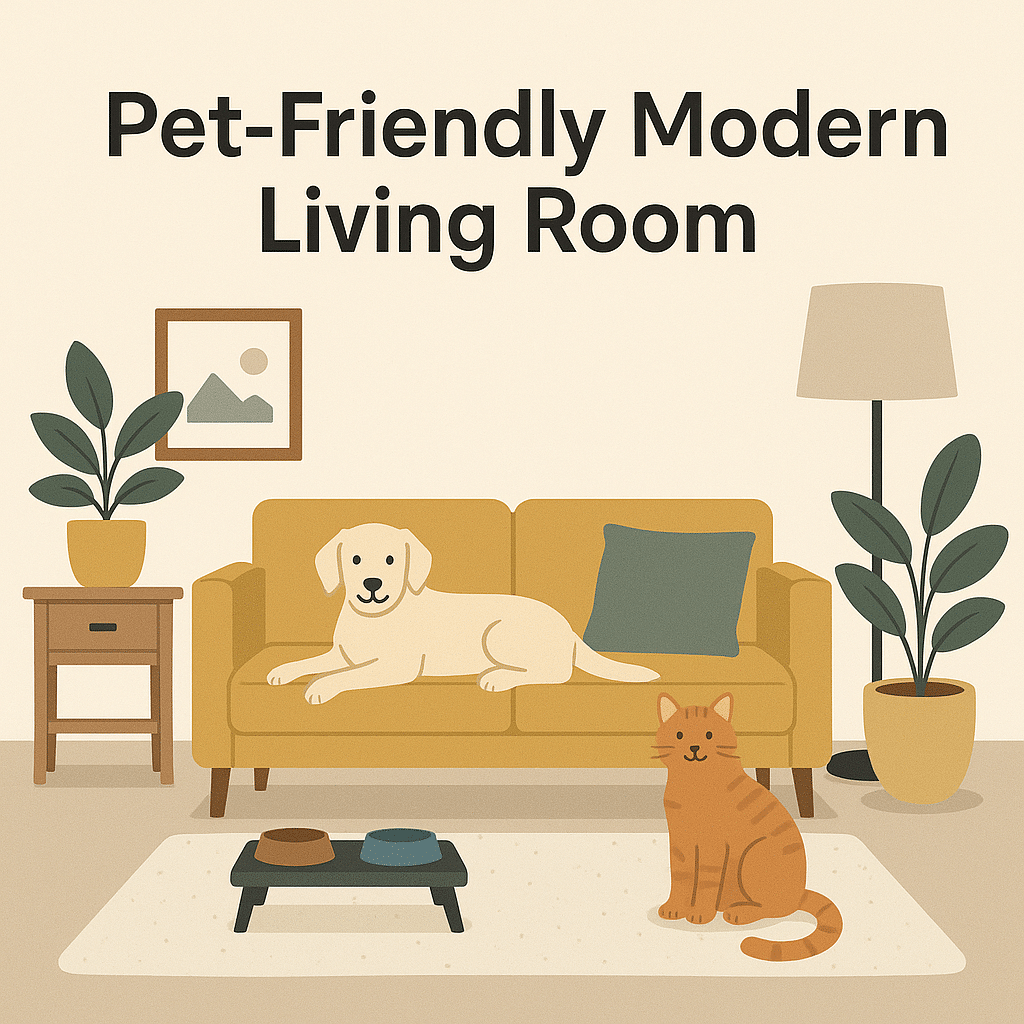
Pet-Friendly Home Décor Ideas: A modern living room with a mustard sofa, relaxed golden retriever, sitting tabby cat, indoor plants, and cozy, neutral-toned furnishings.

Pet-Friendly Home Décor Ideas – Stylish & Practical Solution

Pet-Friendly Home Décor Ideas for a stylish yet practical home. Discover easy, pet-safe décor tips on fabrics, flooring, furniture, and cleaning hacks to keep your home beautiful and pet-friendly. Pet-Friendly Home Décor Ideas: Stylish and Practical Solutions for Your Loving Pet Bringing a new pet into your home is exciting, but it also means new challenges for your décor. Our furry friends can scratch floors, shed hair on the sofa, or knock over decorations. If you’re a first-time pet owner or a long-time pet lover, you might wonder how to keep your home looking great without constantly worrying about messes or damage. The good news is, pet-friendly home décor doesn’t mean you have to give up style for safety – you can have both! A cozy living room designed with pets in mind. Notice the durable leather sofa and easy-clean rug that stand up to pet play, and the pet bed and feeding area that blend into the room.Creating a stylish pet-friendly décor is all about choosing the right materials and designs. By selecting furniture and decor that are durable, easy to clean, and safe for your pets, you can enjoy a beautiful home that welcomes your furry family members. In this guide, we’ll share home décor for pet owners filled with pet-friendly home décor ideas – from smart fabric and flooring choices to clever design tips and cleaning hacks. Let’s dive in and make your home both stylish and pet-friendly! Pet-Friendly Fabrics and Upholstery One of the biggest concerns for pet owners is furniture fabric. The right fabrics can resist claws, fur, and spills, keeping your home looking neat. Here are some durable, easy-to-clean home décor fabric ideas: Tip: Whichever fabric you choose, consider getting machine-washable slipcovers for sofas or chairs. A slipcover protects your furniture and can be tossed in the wash when it gets dirtyfabricakraft.com. This way, you can keep even light-colored furniture looking fresh. Flooring Options for Pet Owners Flooring is another big part of pet-friendly home décor. You’ll want floors that are scratch-resistant and simple to clean, especially if you have energetic dogs or cats dashing around. Here are some home décor for pet owners floor ideas: Tip: Keep doormats at entrances so dirty paws get wiped off before hitting your main floors. A washable door mat or a towel by the door can greatly reduce mud and dirt inside. Pet-Safe and Durable Furniture Ideas Pets love to jump on furniture, rub against tables, and sometimes even chew things they shouldn’t. That’s why it’s important to pick pet-safe furniture ideas that are sturdy and safe for your four-legged friends: Stylish Décor Tips for Pet Owners Making your home pet-friendly isn’t only about the big items like couches and floors. It’s also in the little décor details. Here are some simple, stylish tips on how to decorate with pets in mind: Easy-to-Clean Home Décor & Cleaning Hacks No matter how well you decorate, keeping a home with pets clean is an ongoing task. But a few clever cleaning hacks can make it much easier to maintain a fresh, neat home. Here are some tips: Pet-Friendly Design Inspiration: Making Pets Part of Your Home Now for some creative design inspiration to truly integrate your pet into your home décor in style! Beyond the basics, here are a few inspiring ideas that are both stylish and pet-friendly: Conclusion:Creating a pet-friendly home is all about balance. You want a living space that’s beautiful and reflects your style, but also one where your pets can roam freely, play, and relax without causing damage or getting hurt. By using the pet-friendly home décor ideas above – choosing durable fabrics and floors, opting for pet-safe furniture, and adding clever design touches – you can achieve a home that is both stylish and practical for pet owners. Remember, pet-friendly décor matters because it keeps your beloved animals safe and happy while keeping you happy about your home’s look. With a few smart choices and creative ideas, you won’t have to sacrifice style for your pets. Instead, you’ll create a harmonious space where everyone (two-legged and four-legged alike) feels right at home. Now grab a chew toy or a feather wand, give your pet some love, and enjoy your gorgeous, pet-friendly haven! Also, Visit Dream Home Heaven for getting more home related blogs and products. Stay with us!

Pet-Friendly Home Décor Ideas – Stylish & Practical Solution Read More »

Featured image of luxurious beige bed sheets with pillows, overlaid with the text “Luxury Bed Sheets Under 0.

Luxury Bed Sheets Under $100 – 10 Best Affordable Picks

Upgrade your sleep sanctuary without splurging. Discover the 10 best luxury bed sheets under $100 with reviews, comparisons, and tips for hotel-quality comfort on a budget. Guide to Luxury Bed Sheets Under $100 There’s nothing like slipping into luxurious bed sheets at the end of a long day. Thankfully, creating a five-star hotel feeling at home doesn’t have to break the bank. In this guide, we’ll show you how to find luxury bed sheets under $100 that look and feel upscale. Remember, we spend about one-third of our lives in bed, so investing in comfortable sheets is well worth it. We’ll cover the top 10 affordable luxury sheet sets (with side-by-side comparisons), plus what to consider when shopping – all in simple terms a 7th grader can understand. Let’s dive in! A well-made bed with crisp, luxury sheets can give your bedroom a five-star hotel feel. Good sheets make a big difference in your sleep quality and bedroom style. Even if you’re on a budget, you can find sheets that are soft, durable, and breathable. Below are our picks for the 10 best luxury bed sheets under $100, each with its own perks. (Prices mentioned are for queen size sets, which typically include a fitted sheet, flat sheet, and two pillowcases.) Tip: Before using new bed sheets, wash them first. A gentle wash removes factory finishes and can make cotton sheets softer and cozier on the first night. Top 10 Luxury Bed Sheets Under $100 (Affordable & Cozy Picks) Here are ten hand-picked sheet sets that deliver a luxurious experience for less. We’ve included a variety of materials – from high-quality cotton to silky bamboo and plush microfiber – so you can choose what suits you best. After the list, you’ll find a comparison table and a quick buying guide to help you decide. Let’s count down the best options for luxury bed sheets under $100! 1. California Design Den 400 Thread Count Cotton Sateen Sheets – Hotel Quality Feel Material: 100% Long-Staple Cotton (Sateen weave)Thread Count: 400 (single ply)Why We Love It: This California Design Den sheet set is often rated the best cotton sheets under $100 by experts. The fabric has a smooth sateen finish that feels substantial and soft – like bedding from a fancy hotel. Testers at Good Housekeeping were amazed that a under-$50 cotton set could be so durable and comfy, resisting pilling in lab tests. If you want classic cotton sheets that balance softness and crispness, this set is a top choice. It comes in many colors and fits mattresses up to 16” deep. Sleepers report that it stays snug on the bed with no bunchinggoodhousekeeping.com. It’s hard to find better quality at this price point, making these sheets a fantastic value for luxury on a budget. Highlights: Machine-washable in warm water (helps keep sheets clean and germ-freegoodhousekeeping.com), OEKO-TEX certified (no harmful chemicals), and available in 30+ colors. Many reviewers say these sheets feel “smooth and luxurious” and hold up well to frequent washing. 2. Mellanni Hotel Luxury 1800 Bedding – Best Budget Microfiber Set Material: Double-Brushed Microfiber (Polyester)Thread Count Equivalent: “1800” Series (microfiber doesn’t use traditional thread count)Why We Love It: The Mellanni sheet set has earned its fame as one of Amazon’s most popular bedding products – and for good reasongq.com. For around $30, you get unbelievably soft and cozy sheets that rival the feel of pricier sets. The fabric is brushed microfiber, meaning it’s very smooth, drapes well, and resists wrinkles. It’s perfect if you love a warm, fleece-like feel to snuggle into, especially in colder monthsgq.com. While microfiber isn’t as breathable as cotton, Mellanni’s sheets still get lots of love from users who say they’re comfortable year-round. The fitted sheet has deep pockets and strong elastic, so it stays put on mattresses even up to 16” thick. Mellanni offers a lifetime promise (you can return it anytime if you’re not satisfied), which shows their confidence in the product. Highlights: Outstanding value – often under $35 for a queen set. Available in dozens of colors and prints to match any bedroom. Keep in mind, microfiber is less breathable than natural fibers, so hot sleepers might save these for wintergq.com. But for softness and easy care (they’re fade and stain-resistant), Mellanni’s “Hotel Luxury 1800” sheets are a budget-friendly luxury. Fun fact: GQ Magazine even crowned this set the “Best Sheets Under $100” for its cozy feel and pricegq.comgq.com. 3. Thread Spread 1000-Thread-Count Egyptian Cotton Sheets – Five-Star Hotel Vibes Material: 100% Egyptian Cotton (Sateen weave)Thread Count: 1000 (using extra-long staple fibers)Why We Love It: If you adore the thick, silky sheets at upscale hotels, this set by Thread Spread will delight you – without costing an arm and a leg. It’s made of genuine Egyptian cotton with a lustrous sateen weave and a whopping 1000 thread count. That means the fabric is densely woven, smooth, and strong. These sheets have a slight sheen and feel weighty and luxurious against the skin. According to Men’s Health, the Thread Spread set feels “buttery soft” yet durable, and even comes in over 30 colors to suit your stylemenshealth.com. The deep-pocket fitted sheet accommodates mattresses up to 15” and stays snug. Despite the high thread count, users report the sheets are breathable and don’t trap heat, thanks to the high-quality cotton. They’re also Oeko-Tex certified free of harmful chemicals. Highlights: Premium features like elegant hem styling and rich color options. These sheets are often on sale for around $70–$80 (queen), making them a steal for authentic Egyptian cotton that’s comparable to much pricier brands. They wash well with minimal pilling or fading. If you want to treat yourself to a true luxury sheet experience on a budget, Thread Spread’s set is a top pickmenshealth.com. 4. Hotel Sheets Direct 100% Bamboo Sheets – Cooling & Silky Material: 100% Bamboo Viscose (Rayon derived from bamboo)Thread Count: Not measured in thread count (approximately 144 GSM fabric weight)Why We Love It: Bamboo sheets are renowned for their cooling and

Luxury Bed Sheets Under $100 – 10 Best Affordable Picks Read More »

Four different styles of baby outdoor rocking chairs displayed on a green lawn with the title “10 Best Baby Outdoor Rocking Chairs 2025” on top.

10 Best Baby Outdoor Rocking Chairs 2025

Top 10 baby outdoor rocking chairs for safe, soothing fun. Compare features, safety, and comfort to find the perfect outdoor rocker for your little one. Baby Outdoor Rocking Chair – Top 10 Picks for Fun & Comfort Relaxing outdoors with your baby can be a delightful experience. A baby outdoor rocking chair offers a gentle motion that soothes infants while you both enjoy fresh air. In this guide, we’ll explore the 10 best options available – from infant rocker seats to toddler porch rockers – and compare their features side by side. We’ll also cover useful tips (like safety and care) to help you choose the perfect rocker. Why Rocking and Outdoors Are Great for Babies Spending time outside and gentle rocking motions both have real benefits for babies. For example, rocking can improve sleep quality – research shows that rocking helps babies (and even adults!) sleep better and may boost memory formation. And outdoor time is healthy too: it can aid babies’ sleep, support their physical development, strengthen their immunity, and stimulate their senses. In short, using a rocking chair outdoors combines two wonderful things – calming motion and nature’s fresh air – to keep your little one happy and relaxed. Tip: Make outdoor rocking a calming part of your baby’s routine. A few minutes of gentle rocking on the patio or in the yard after feeding can help fussy babies settle down and nap more easily. Just remember to stay with your baby and enjoy the moment together! Top 10 Best Baby Outdoor Rocking Chairs (2025 Edition) Below we’ve listed our ten favorite baby outdoor rocking chairs, with a mix of infant rocker seats and toddler-sized rocking chairs. We’ll describe each and highlight what makes it special. Later, we’ll compare them side by side on key factors like age range, portability, and safety. 1. Fisher-Price Infant-to-Toddler Rocker – Best All-Around Grow-With-Baby Seat The Fisher-Price Infant-to-Toddler Rocker is a beloved classic that truly grows with your child. It starts as a soothing infant seat (with a calming vibration feature and toy bar) and converts into a toddler rocking chair as your baby gets older. Many parents love its versatility for both indoor and outdoor use. The seat fabric is removable and washable, and it has a built-in kickstand to make it stationary when needed (useful for feeding or when baby is napping). Because it’s lightweight and easy to carry, you can bring it out to the porch or garden so baby can rock beside you. 2. BabyBjörn Bouncer Balance Soft – Best Premium Baby Bouncer for Outdoors The BabyBjörn Balance Soft isn’t a traditional rocking chair with legs, but it’s a top-rated baby bouncer that rocks gently with your baby’s own movements. This seat is known for its exceptional quality, ergonomic design, and portability – making it a great option to use outside on a deck or lawn. It has no batteries or cords; instead, the baby’s wiggles make it bounce or rock naturally, which can be very soothing. The fabric seat cradles even a tiny newborn comfortably (with proper head and neck support) and can be adjusted to multiple incline positions. When you’re done, it folds completely flat for easy carrying or storage. 3. Ingenuity Keep Cozy 3-in-1 Grow with Me Rocker & Seat – Most Versatile & Snuggly The Ingenuity Keep Cozy 3-in-1 is a clever rocker that functions in three modes: as an infant rocking bassinet-like seat, a stationary vibrating seat, and a toddler chair. For families who want multi-purpose gear, this is a fantastic choice. It includes a soothing vibration feature and a removable infant bolster to support newborns. As your baby grows, you can remove the toy bar and convert it into a toddler rocker that a small child can sit in on their own. It’s built with a sturdy frame yet is fairly lightweight to move around. 4. Baby Einstein Infant-to-Toddler Rocker (Opus Edition) – Best Musical Rocker If you want a rocker that’s entertaining as well as soothing, the Baby Einstein Infant-to-Toddler Rocker is a wonderful option. This seat is similar in concept to the Fisher-Price rocker (#1 on our list) – it transitions from a infant rocker to a toddler seat – but it has the Baby Einstein twist of fun music and melodies built in. The “Opus” model, for instance, features an ocean-themed toy bar with a musical octopus toy (Opus) that plays classical tunes and lights up. Babies can enjoy gentle rocking or static seating (it also has a fold-out kickstand to stabilize it). The secure harness keeps your little one strapped in while they bat at the toys and listen to sounds. 5. Baby Delight Go With Me Alpine Deluxe Portable Bouncer – Best Portable Outdoor Bouncer Planning a picnic, camping trip, or just like to move around a lot? The Baby Delight Go With Me Alpine Deluxe is designed for on-the-go parents and is ideal for outdoor use. It’s essentially a lightweight infant bouncer/rocker seat that folds up compactly like a camping chair. It has three recline positions to suit newborns or older babies, and a removable mesh bug net and sun canopy (on some models) which are fantastic features for using outdoors in a park or backyard. The frame is very sturdy but lightweight, and the seat fabric is resistant to moisture and easy to clean. 6. Graco DuetSoothe Swing and Rocker – Best Swing + Rocker Combo for Home & Patio The Graco DuetSoothe is a bit different from the other items on this list: it’s primarily an electric baby swing for indoor use, but its seat is detachable and doubles as a portable rocker. We include it here because many parents use the rocker seat separate from the swing base and take it onto porches or patios. The seat has a handle, so you can carry your baby in it like a little rocker bassinet. As a swing, it offers multiple speeds and even vibration settings, which can be soothing for fussy infants.

10 Best Baby Outdoor Rocking Chairs 2025 Read More »