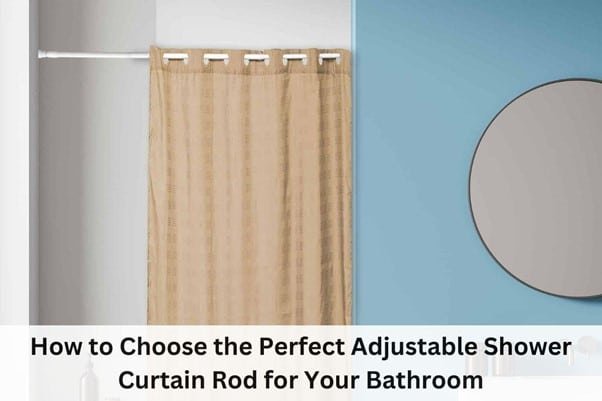
Here’s the short answer on how to choose an adjustable shower curtain rod: measure wall to wall at the height the rod will sit, then pick a rod whose adjustable range puts your number near the middle, not at the very end. For a standard 60-inch tub, that usually means a rod sold as something like 44–72 inches. Go with a tension rod if you can’t or don’t want to drill, and a screw-mounted rod if you want it to never move again.
The rest is details, but they’re the details that decide whether your rod stays put for years or crashes into the tub at 6 a.m. Below you’ll find a size chart, the right mounting height, tension vs mounted, straight vs curved, how much weight a rod can hold, and a simple install that keeps a tension rod from slipping.
🚿 Quick Answer: Which Adjustable Shower Curtain Rod Should I Buy?
- Measure: wall to wall at rod height. A standard alcove tub is about 60 inches long.
- Range: choose a rod whose range puts your measurement in the middle (a 60-inch opening fits a 44–72 inch rod well).
- Height: about 75–77 inches from the floor for a standard 72-inch curtain.
- Tension or mounted? Tension for renters and tile you don’t want to drill; screw-mounted for heavy curtains and busy family bathrooms.
- Small tub? A curved rod bows outward and gives you more elbow room.
In this guide
How to Measure for an Adjustable Shower Curtain Rod
Measure the opening at the exact height the rod will hang, from one finished wall to the other. Walls are rarely perfectly straight, so the gap at 76 inches up can be a quarter inch different from the gap at tub level. That quarter inch matters a lot to a tension rod.
- Mark the height. Put a strip of painter’s tape on each wall at about 76 inches. Use a level so both marks line up.
- Measure wall to wall across the tape. Write the number down to the nearest quarter inch.
- Check what’s in the way. A tile ledge, a window trim or a niche at that height changes where the end caps can sit.
- Measure the tub or shower width too. You’ll need it to pick the curtain size later.
- Compare with the rod’s range. Your number should sit comfortably inside it, ideally near the middle.
Why the middle? Because an adjustable rod is weakest when it’s stretched almost all the way. The inner tube only overlaps the outer tube by a few inches, so the rod sags and twists more easily. Picture Jen’s tub: it measures exactly 72 inches across, and she buys a rod rated “up to 72 inches.” It technically fits, but there’s barely any overlap left, and it drops every time her son tugs the curtain. A 50–86 inch rod would have been rock solid in the same spot.
Shower Curtain Rod Size Chart
Most bathtubs in the US are the same size, which makes rod shopping easier than it looks. Home Depot’s bathtub buying guide says the most common tub is an alcove bath around 60 inches long and 30 inches wide. Use this chart to match your opening to a rod range and a curtain.
| Your opening (wall to wall) | Rod range to look for | Curtain size | Typical space |
|---|---|---|---|
| 🚿 30–40 in | Short tension rod, about 26–43 in | 54 × 78 in (stall) | Small shower stall |
| 🚿 40–54 in | About 36–60 in | 54 × 78 in or 72 × 72 in | Larger stall, small walk-in |
| 🛁 55–65 in | About 44–72 in | 72 × 72 in | Standard 60 in alcove tub |
| 🛁 66–72 in | About 50–86 in | 72 × 72 in or 72 × 84 in | Long or soaking tub |
| 🛁 Over 72 in | Heavy-duty or mounted rod | Extra-wide curtain or two panels | Oversized tub, wide walk-in |
Rod ranges vary by brand, so read the listing. Curtain sizes from Lowe’s and Wayfair guides; the range picks are our recommendation to keep your opening near the middle of the rod’s range.
Now the curtain. Lowe’s lists the standard curtain as 72 inches wide by 72 inches long, with long curtains at 72 to 84 inches and extra-long at 96 inches. Wayfair’s size guide explains why 72 inches works so well: it covers a 60-inch tub with 12 inches to spare, so the curtain hangs in soft folds instead of stretched flat. Their rule of thumb is simple: add 12 inches to the width of your shower.
Got a walk-in shower or a smaller stall? Wayfair lists 54 × 78 inches as the usual stall size. For an unusually wide walk-in, two standard curtains on one rod often look better (and cost less) than hunting for one giant curtain. And if you’re still planning the whole room, our bath remodel ideas on a budget cover where a curtain beats a glass door on price.
How High to Hang a Shower Curtain Rod
For a standard 72-inch curtain, hang the rod about 75 to 77 inches off the floor. That’s the range Wayfair’s rod height guide gives, and it lines up with the math: 72 inches of curtain, plus 1 to 3 inches for the hooks or rings, with the hem landing a few inches inside the tub.
Highest rod height = curtain length + rings + tub wall height − 3 in
Let’s run it with a 72-inch curtain, 2-inch rings and a tub wall 15 inches high. The lowest sensible height is 72 + 2 + 2 = 76 inches, which leaves the hem about 2 inches above the tub floor. The highest is 72 + 2 + 15 − 3 = 86 inches, which leaves the hem 3 inches below the rim, still inside the tub. Anywhere between those two works. Most people land at 75–77 inches because it’s easy to reach and keeps the curtain well inside the tub, but if you’re tall, you have room to go higher.
Two more height checks. First, the rod should sit at least a few inches above the head of the tallest person who showers there, so nobody’s scalp brushes the rings. Second, if you want the bathroom to feel taller, raise the rod close to the ceiling and switch to an 84- or 96-inch curtain. Lowe’s suggests exactly this trick: an extra-long curtain hung high creates the look of more height.
Tension vs Mounted: Which Adjustable Rod Is Right for You?
Both kinds adjust in length. The difference is what holds them up. A tension rod uses a spring or twist mechanism to press rubber end caps against the walls, so there’s no drilling. A mounted rod screws into brackets on the wall. That’s the whole decision, really: do you want zero holes, or zero chance of slipping?
| 🔧 Tension rod | 🔩 Screw-mounted rod | |
|---|---|---|
| Install time | About 5 minutes, no tools | 20–40 minutes, drill needed |
| Wall damage | None | Small screw holes |
| Holds heavy curtains | Okay to fair | Best |
| Can slip or fall | Yes, if set up badly | Very rarely |
| Best for | Renters, tile you won’t drill, quick fixes | Owners, kids who tug, heavy fabric curtains |
| Skip if… | Your walls are uneven or soft | You rent or can’t hit studs or use anchors |
HGTV’s 2026 rod roundup points out that tiled shower walls usually call for a tension rod, since nobody wants to drill through tile, while drywall can take either kind. That matches what most renters face: you can’t drill, so tension it is. The good news is that a well-chosen tension rod on solid tile can stay up for years.
There’s a middle option, too. Some rods, like Moen’s magnetic-post model, are sold to install either with tension or permanently, according to Moen’s rod identification page. Start with tension in a rental, and if you ever buy the place, screw the same rod in.
Straight vs Curved vs Double: Which Shape?
A straight rod is the classic. A curved rod bows outward into the room, which pushes the curtain away from you and gives your elbows more space. If your tub feels cramped or the curtain keeps clinging to your legs, a curved rod is usually the fix.
Two things to know before you switch to curved. Wayfair notes that curved rods are usually about 6 inches longer than standard rods, so a regular 72-inch curtain covers less, and you might want an extra-wide one. And many curved rods mount permanently with screws, which can be a harder install. Kingston Brass, a fixture maker, even mentions that some permanently mounted curved rods may need a pro.
| Shape | Best for | Skip if… |
|---|---|---|
| ➖ Straight | Most tubs, renters, tight budgets | The curtain sticks to you every shower |
| 🌙 Curved | Small tubs, taller people, more elbow room | The bathroom door or toilet sits right next to the tub |
| 🌗 Double curved | Hanging a liner and a fabric curtain separately | You use one curtain with a built-in liner |
| 📐 L-shaped | Corner showers, clawfoot tubs | You have a standard alcove tub |
Here’s a real-world check. In a 5-by-8-foot hall bathroom, the toilet often sits right beside the tub. A curved rod bulges out a few inches into that space. That’s great inside the shower, but measure from the tub edge to the toilet first. If the curtain would brush the tank, stay straight. Small bathroom in general? Our small apartment storage ideas on a budget include a few tricks for the space around the tub, too.
Material, Finish and Weight Capacity
Bathrooms are wet, so rust is the enemy. Stainless steel and aluminum are the two materials most rods use for that reason: both stand up to humidity much better than plain painted steel. Cheap rods often look fine on day one and show orange rust spots at the seams by month six.

For finish, match your other metal: faucet, towel bar, cabinet pulls. Brushed nickel and chrome hide water spots and blend with almost anything. Matte black looks sharp and modern but shows hard-water marks more. If you’re redoing the whole look, our guide to bathroom sets with shower curtains can help you pull the colors together.
Weight capacity is the spec most people skip, and it’s the one that matters most for tension rods. Ratings on popular models in HGTV’s 2026 roundup run from about 12 pounds (an Amazon Basics tension rod) to 30 pounds (Zenna Home and EBOATOP tension rods). A thin vinyl liner weighs very little, but a fabric curtain, a liner, 12 metal rings and wet fabric add up fast. Then someone grabs the curtain to steady themselves.
How to Install an Adjustable Shower Curtain Rod So It Doesn’t Fall
A tension rod falls for three reasons: it’s set too loose, it’s stretched near its limit, or the end caps sit on a slippery or uneven surface. Fix those three and most rods stay put. Here’s the step-by-step.
Tension rod: 5-minute install
- Clean the spots where the end caps will press. Soap film and conditioner residue are slippery. Wipe with rubbing alcohol and let it dry.
- Thread the rings or hooks on first if your rod has fixed end caps. It’s much harder once the rod is up.
- Extend the rod until it’s just longer than the opening, following the maker’s instructions.
- Angle it into place at your tape marks, then straighten it so it compresses against both walls.
- Twist to tighten (for twist-lock rods) until it feels firm. Check it’s level.
- Hang the curtain and test with a gentle pull. Re-check the tension after a week, since rubber caps settle.
Still slipping? Try these fixes in order. Put the end caps on a flat tile face, not a grout line. Add clear adhesive rod holders or small cup supports under each end cap; they cost a few dollars and take the weight off the friction. And if the rod twists shorter over time, home blogger Grit and Polish shares a simple fix that works on many two-piece rods: drill a small hole where the two tubes overlap and add a short screw, which stops the tubes from turning against each other.
Mounted rod: what changes
- Find studs or use anchors. Screws into bare drywall will pull out. Use the anchors that come with the rod, or better ones rated for the weight.
- Drilling tile? Use a tile or carbide bit, start slowly, and put painter’s tape over the spot so the bit doesn’t wander. Drilling into a grout line is easier to patch later.
- Level first, then mark both brackets. A rod that’s off by half an inch is easy to see from the doorway.
- Seal tile holes with a dab of silicone before the screws go in, so water can’t get behind the tile.
If you’re thinking about tile work while you’re at it, our bathroom tile ideas are worth a look before you drill anything.
What Does a Good Adjustable Shower Curtain Rod Cost in 2026?
You don’t need to spend much. In HGTV’s March 2026 picks, prices ran from about $16 for a basic tension rod to $229 for a solid brass corner rod. Here’s how that breaks down.
| Budget | What you get | Example price |
|---|---|---|
| 💲 Under $25 | Basic straight tension rod, lighter load rating | About $16–$25 |
| 💲💲 $25–$50 | Rust-resistant tension rods, double curved rods | About $28–$46 |
| 💲💲💲 $50–$100 | Permanent-mount curved rods, designer finishes | About $64–$84 |
| 💎 $100+ | Solid brass, corner and clawfoot rods | Up to about $229 |
Example prices from HGTV’s Best Shower Curtain Rods of 2026 (updated March 2026). Prices change often; check before you buy.
Our take? For most standard tubs, a rust-resistant tension rod in the $25–$50 range is the sweet spot. Spend more only if you want a curved permanent rod, a special finish, or a corner setup.
Common Mistakes to Avoid
- Buying a rod at the edge of its range. Your measurement should sit near the middle.
- Measuring at the tub rim. Measure at rod height; walls aren’t perfectly straight.
- Ignoring weight. A heavy fabric curtain plus liner can beat a light-duty tension rod.
- Hanging the rod too low. The curtain bunches on the tub floor and grows mildew.
- Forgetting the curtain width with a curved rod. It needs more fabric to cover the same opening.
- Setting end caps on grout or soap film. Clean, flat tile grips far better.
✅ Before You Buy Checklist
- ☐ I measured wall to wall at rod height
- ☐ My number sits near the middle of the rod’s range
- ☐ I chose tension or mounted based on my walls and lease
- ☐ The load rating covers my curtain, liner and rings
- ☐ The finish is stainless, aluminum or rated rust-resistant
- ☐ My curtain is about 12 inches wider than the opening
Frequently Asked Questions
What size shower curtain rod do I need for a standard tub?
Most standard alcove tubs are about 60 inches long, so look for an adjustable rod with a range of roughly 44 to 72 inches. That keeps your measurement near the middle of the range, where the rod is strongest.
How high should a shower curtain rod be?
For a standard 72-inch curtain, about 75 to 77 inches from the floor. If you use an 84- or 96-inch curtain, mount the rod higher so the hem still ends a few inches inside the tub.
Are tension shower curtain rods good?
Yes, for most renters and tiled walls. A tension rod with a good load rating, set near the middle of its range on clean, flat tile, can stay up for years. For heavy curtains or kids who pull on the curtain, a screw-mounted rod is safer.
Why does my tension shower rod keep falling?
Usually it’s too loose, stretched near its maximum length, or pressing on soap film, grout or uneven tile. Clean the walls, re-tension it, add adhesive end-cap supports, or switch to a rod with a larger range.
Is a curved shower rod better than a straight one?
A curved rod gives you more elbow room and keeps the curtain off your body, which is great in small tubs. It needs a slightly wider curtain and often a permanent install, and it sticks out further into the room.
Do I need a special rod for a tiled shower?
No, but a tension rod is the easiest choice because it needs no drilling. If you want a mounted rod on tile, use a tile drill bit and seal each hole with silicone.
Choosing Your Adjustable Shower Curtain Rod: The Bottom Line
Measure wall to wall at about 76 inches up. Pick a rod whose range puts that number near the middle. Choose tension if you can’t drill and mounted if you want it to never move, then go curved if your tub feels tight. Add a rust-resistant finish and a load rating that covers your curtain, and you’re done. For a standard 60-inch tub, that’s a 44–72 inch rust-resistant tension rod and a 72 × 72 inch curtain, hung about 75–77 inches high.
Want the rest of the window and bath details to match? Our guide on how to choose curtains for your home uses the same measure-first approach for every window in the house.
Keep learning: more bathroom guides from Dream Home Heaven
- What size mirror for a 60-inch vanity? (size chart + hanging height)
- Complete bathroom sets with shower curtains
- How to remove stains from a fiberglass sink
Sources: Home Depot bathtub buying guide (updated April 2025); Lowe’s shower curtain and accessories buying guide; Wayfair shower curtain size and rod height guides; HGTV, The Best Shower Curtain Rods of 2026 (updated March 2026); Moen shower rod identification and installation; Kingston Brass; The Grit and Polish. Checked November 2026.
What’s your bathroom setup: tension or mounted, straight or curved? Tell us in the comments, and if your rod keeps slipping, share your measurements. We’re happy to help you figure out why.