

Here’s how to remove stains from a fiberglass sink without wrecking the finish: start with dish soap and warm water, move up to a baking soda paste, use white vinegar for hard water and an oxalic acid cleanser for rust, and keep steel wool and gritty powders far away. Most stains come out with the first two steps.
The trick with fiberglass is the surface. It has a thin, glossy coat (called gelcoat) over the glass-fiber shell. Scratch that coat and new stains soak in faster every time. So below you’ll find a stain-by-stain chart, step-by-step methods for rust, hard water, coffee, pot scuffs, paint and yellowing, how to bring back the shine, and the cleaners that do more harm than good.
🧽 Quick Answer: How Do You Remove Stains From a Fiberglass Sink?
- Everyday grime: dish soap, warm water, soft sponge.
- Most stains: baking soda paste (about 3 parts soda to 1 part water), wait 15 minutes, wipe in circles.
- Hard water: white vinegar on paper towels for 15–30 minutes.
- Rust: an oxalic acid soft cleanser made for fiberglass, rinsed within a minute.
- Never: steel wool, green scrub pads, scouring powder or bleach mixed with anything.
In this guide
Why Fiberglass Sinks Stain So Easily
Fiberglass is glass fibers set in plastic resin, topped with that smooth gelcoat. It’s light, cheap and warm to the touch, which is why you see it in laundry rooms, utility sinks, RVs, older bathrooms and budget kitchens. It doesn’t rust or chip like enamel. But it’s softer than porcelain or stainless steel, so it scratches more easily.
Those tiny scratches are where trouble starts. Coffee, hair dye, iron from well water and gray metal marks from pans all settle into them. That’s why an old fiberglass sink looks dingy even right after you clean it, and why the gentle approach always wins in the long run.

Not sure if your sink is fiberglass or acrylic? Tap it. Both sound a bit hollow, unlike the solid “clink” of porcelain. The good news is the methods below are safe for both.
Fiberglass Sink Stain Chart
Match the stain, then use the gentlest fix first. Always test a new product on a hidden spot, like the back of the basin, and rinse well between products.
| Stain | What it looks like | What to use | Avoid |
|---|---|---|---|
| 💧 Hard water | White, chalky film or rings near the drain | White vinegar soak, 15–30 min | Scraping with metal |
| 🟠 Rust | Orange-brown streaks under the faucet | Oxalic acid soft cleanser, or borax + lemon paste | Chlorine bleach |
| ☕ Coffee, tea, food dye | Brown or colored rings | Baking soda paste, then dish soap | Scouring powder |
| 🍳 Pot and pan scuffs | Gray or black marks | Baking soda paste or a melamine sponge, light touch | Steel wool, green pads |
| 🎨 Paint, ink, marker | Dried colored spots | Acetone on a cloth, dab and rinse | Pouring solvent on the stain |
| 🟡 Yellowing | Dull, yellow tint all over | Baking soda + 3% hydrogen peroxide paste | Mixing peroxide with vinegar |
| 🖤 Mildew | Black dots around the drain or caulk | Diluted bleach on its own, rinsed well | Bleach with vinegar or ammonia |
General guidance for fiberglass and gelcoat. Your sink maker’s care sheet comes first.
How to Remove Stains From a Fiberglass Sink: The Basic Method
Start here no matter what the stain is. You’ll be surprised how often this is all it takes.
- Wash the sink with hot water, a squirt of dish soap and a soft sponge. This lifts grease so the next step can reach the stain.
- Mix a paste of about 3 tablespoons of baking soda and 1 tablespoon of water. It should feel like toothpaste.
- Spread it on the stain and wait 15 minutes. For an old stain, cover it with plastic wrap and leave it overnight so it doesn’t dry out.
- Rub in small circles with a damp microfiber cloth or the soft side of a sponge.
- Rinse and dry. Rinse the sink well with warm water and dry it with a towel so you can see what’s left.
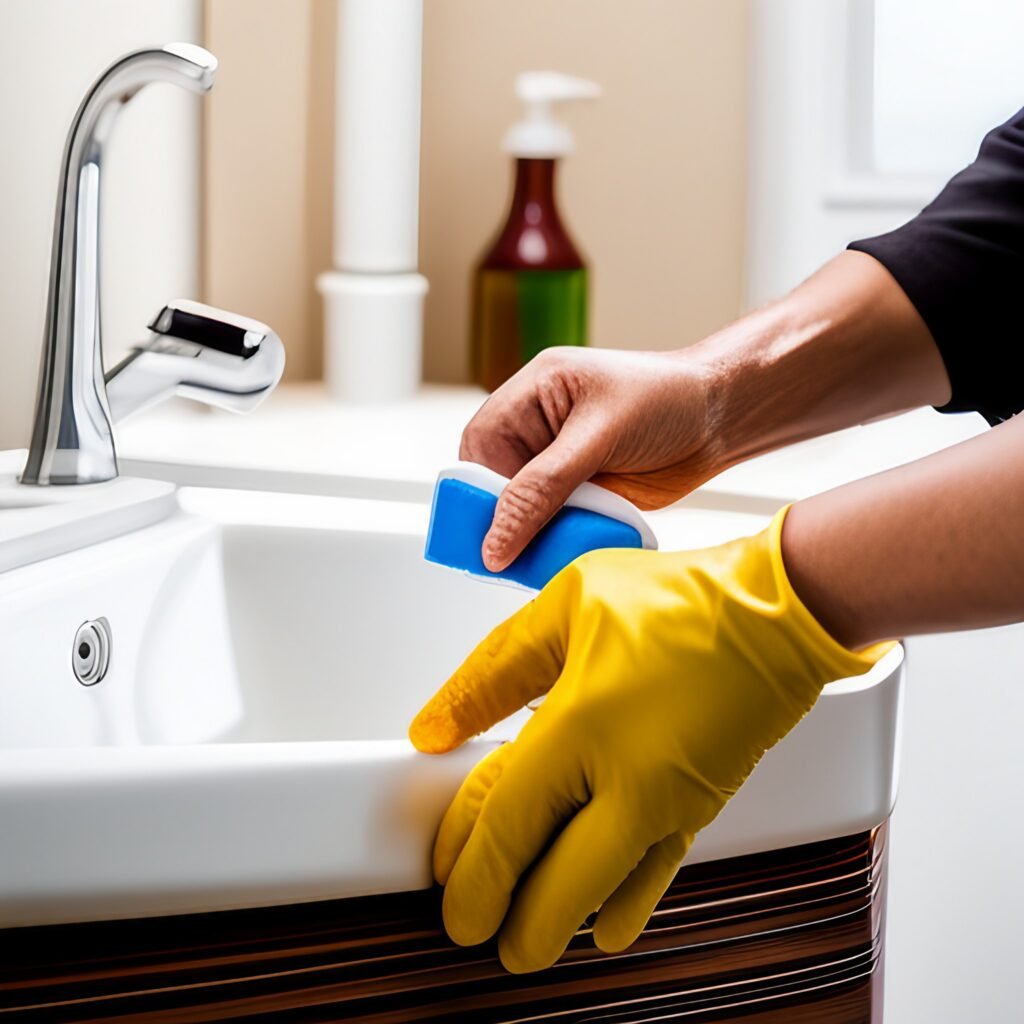
Picture a laundry-room sink with a brown ring where a coffee mug sat soaking all weekend. One round of paste, 15 minutes, a few circles with a cloth, and it’s gone. If a shadow is still there, repeat once before reaching for anything stronger. That’s the whole philosophy: step up slowly.
How to Remove Hard Water Stains From a Fiberglass Sink
Hard water leaves calcium and magnesium behind as it dries, which shows up as a white crust around the drain and under the faucet. Baking soda won’t dissolve minerals. You need a mild acid, and plain white vinegar is the easiest one.
- Soak paper towels in undiluted white vinegar (or a 1:1 vinegar-water mix for light film).
- Press them onto the crusty spots so they cling. Wrap the faucet base too.
- Wait 15 to 30 minutes.
- Scrub gently with a soft brush or an old toothbrush, then rinse with plenty of water.
- For thick buildup, follow with the baking soda paste. It’ll fizz a little, which is fine once you’ve rinsed most of the vinegar away.
A store-bought limescale remover works too. Pick one whose label says it’s safe for fiberglass or acrylic and follow the directions closely.
Hard water and rust often show up together, especially on well water. So if the white crust has orange streaks running through it, keep reading.
How to Remove Rust Stains From a Fiberglass Sink
Fiberglass can’t rust, but iron in your water can. It leaves orange-brown trails under a dripping faucet, and a forgotten wet can or cast-iron pan leaves rings. Rust needs an acid that grabs iron, and oxalic acid is the classic one.
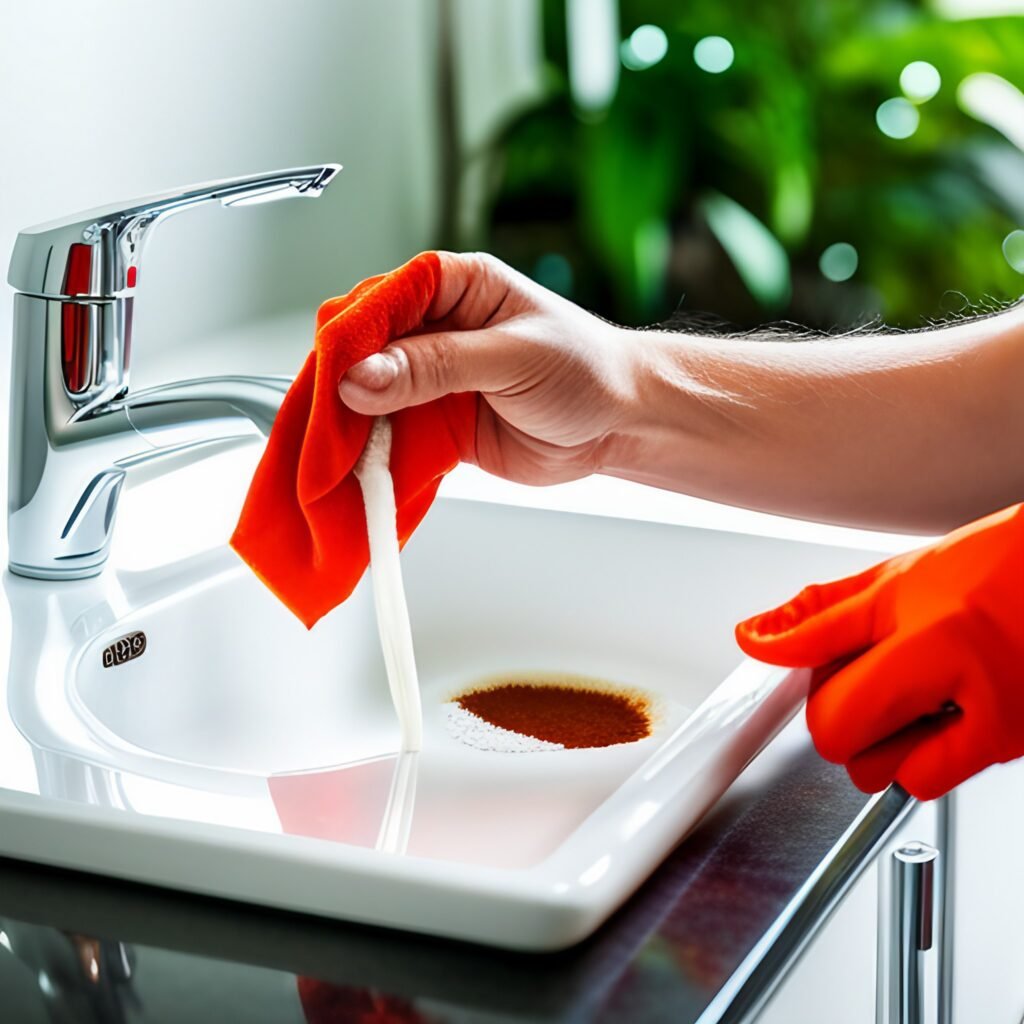
Option 1: oxalic acid soft cleanser. Bar Keepers Friend Soft Cleanser, for example, lists oxalic acid in its ingredients and says it’s safe for fiberglass. The maker also says to test a hidden spot first, rinse within one minute and never mix it with bleach or ammonia. Squeeze a little onto a damp sponge, rub the rust for 30 to 60 seconds, then rinse well. Wear gloves if you have sensitive skin.
Option 2: borax and lemon juice. Mix about 1/4 cup of borax with enough lemon juice to make a thick paste. Spread it on the rust, wait about 10 minutes, then wipe with a damp cloth and rinse. Repeat if needed. The old salt-and-lemon trick works the same way for very light rust, but use fine salt and a gentle hand, since coarse salt can scratch.
Here’s the catch: if the rust keeps coming back in the same spot, the sink isn’t the problem. A dripping faucet or iron-heavy water is. Fix the drip (often a cheap washer or cartridge) or ask about an iron filter if you’re on a well, and the stains stop for good.
Scuffs, Pot Marks and Tough Stains
Gray marks from pots and pans are bits of metal rubbed onto the surface, not true stains. Baking soda paste usually lifts them. If not, a melamine sponge (the “magic eraser” type) works, but it’s a very fine abrasive, so wet it, use light pressure and stop as soon as the mark is gone. Rubbing one spot hard will leave a dull patch.
Paint, ink, marker and hair dye need a solvent. Put a little acetone (nail polish remover) on a cotton pad or cloth and dab, don’t pour. Work in a ventilated room, away from any flame, and rinse with soapy water right after. Test first, because solvents can soften some finishes.
Light scratches that hold dirt can be buffed with a fiberglass polishing compound and a soft cloth. That’s the same kind of product boat owners use on gelcoat, and it smooths the surface so stains have less to grip.
Say you painted the laundry room and rinsed brushes in the utility sink. A week later there are dried blue blotches. Dab them with acetone, wipe, then wash with dish soap. Five minutes, no scrubbing. That’s a lot easier than the sanding some people try first.
Yellowing and Discoloration
Older white fiberglass can turn yellow from sunlight, soap residue and hard water. Try this paste: baking soda mixed with 3% hydrogen peroxide (the brown-bottle kind from the pharmacy) until it’s thick. Spread it over the yellow area, leave it for about 30 minutes, then wipe and rinse. Repeat over a few days for stubborn yellowing.
For black mildew spots around the drain, a diluted bleach solution on its own is fine on white fiberglass. Ventilate the room, rinse completely afterward and never combine it with other products. The Alabama Department of Public Health also warns against mixing hydrogen peroxide with vinegar, so keep the peroxide paste and the vinegar soak on different days or rinse well between them.
For mild discoloration, plain dish soap and warm water scrubbed with a sponge may be enough. Give that a try first.
How to Restore the Shine
Once the stains are gone, the sink can still look flat. That’s the gelcoat asking for a little care.
- Dry it completely and look at it in good light.
- Apply a non-abrasive fiberglass cleaner and polish with a soft cloth, in small circles.
- Buff it off with a clean microfiber cloth.
- Repeat every few months. The polish fills fine scratches and makes water bead, so stains rinse away.
What Never to Use on a Fiberglass Sink
Now that you know what works, here’s what to keep in the cabinet. Most “ruined” fiberglass sinks we hear about were scrubbed, not stained.
✓ Safe to use
- Microfiber cloths and soft sponges
- Soft nylon brush or old toothbrush
- Dish soap and warm water
- Baking soda paste
- White vinegar
- Oxalic acid soft cleanser
- Plastic scraper for stuck bits
✗ Skip these
- Steel wool or soap-filled steel pads
- Green scouring pads
- Gritty scouring powders
- Wire or stiff brushes
- Oven cleaner and drain cleaner on the surface
- Bleach mixed with vinegar, ammonia or acids
- Metal knives or razor blades
You may see guides that suggest steel wool for paint or heavy stains. On fiberglass it trades one problem for a worse one: permanent scratches that grab every future stain. Skip it, even “just this once.”
How to Keep a Fiberglass Sink From Staining
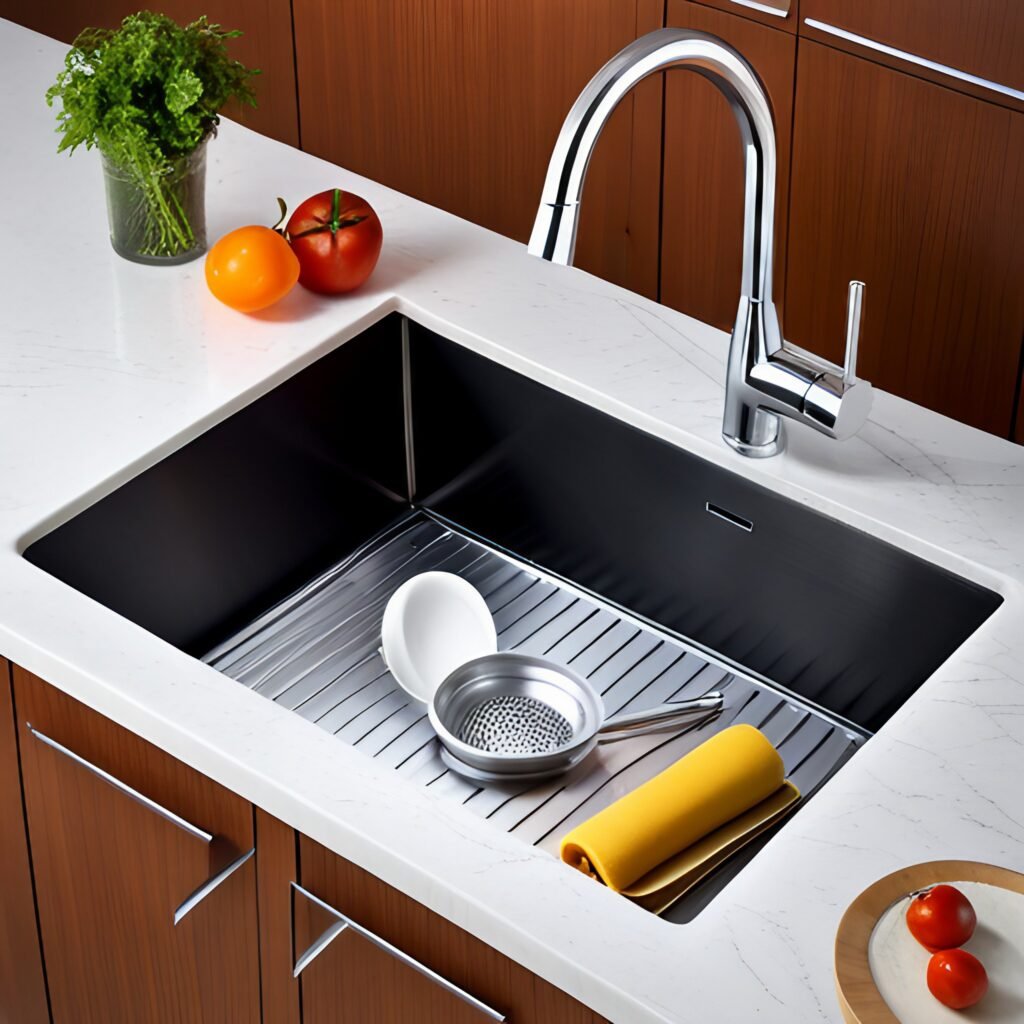
- Rinse and wipe daily with a little dish soap so grime never sets.
- Dry the sink at night with a towel. Fewer drops means fewer mineral spots.
- Use a rubber or silicone sink mat under pots, cans and tools.
- Don’t leave coffee, dye or metal soaking in the basin overnight.
- Fix drips fast. A dripping faucet is the number one cause of rust trails.
- Polish every few months to keep the gelcoat sealed.
Sinks are one of those spots that get wiped but not deep-cleaned. If yours sneaked up on you, our list of things people forget to clean at home is a good next stop, and while you’re in the kitchen, here’s how to clean a dishwasher the easy way.
Mistakes to Avoid
- Going straight to the strongest product. Start with soap and baking soda.
- Mixing cleaners in the sink, or using one right after another without rinsing.
- Letting an acid cleaner sit longer than the label says.
- Scrubbing one spot hard until it goes dull.
- Skipping the spot test on an older or colored sink.
✅ Fiberglass Sink Cleaning Checklist
- ☐ Washed with dish soap and warm water first
- ☐ Matched the stain to the right cleaner
- ☐ Tested the product in a hidden spot
- ☐ Used only soft cloths, sponges or nylon brushes
- ☐ Rinsed fully before switching products
- ☐ Dried and polished to finish
Frequently Asked Questions
Does vinegar damage a fiberglass sink?
No, not when you use it the normal way. White vinegar is a mild acid that dissolves hard water deposits. Rinse it off after 15 to 30 minutes and never mix it with bleach.
Can you use a Magic Eraser on fiberglass?
Yes, carefully. Melamine sponges are a very fine abrasive, so wet the sponge, use light pressure and stop once the mark is gone. Hard scrubbing can leave a dull spot.
Is Bar Keepers Friend safe for fiberglass sinks?
The maker says its Soft Cleanser is safe for fiberglass. Test a hidden spot first and rinse within one minute.
Can you use bleach on a fiberglass sink?
Diluted bleach is fine for mildew on white fiberglass if you rinse well. Don’t use it on rust, and never mix it with vinegar, ammonia or other cleaners.
How do you get yellow stains out of a fiberglass sink?
Make a paste of baking soda and 3% hydrogen peroxide, leave it on for about 30 minutes, then wipe and rinse. Repeat if needed, and polish afterward.
What gets rust off a fiberglass sink fast?
An oxalic acid soft cleanser works fastest. A paste of borax and lemon juice left for about 10 minutes is a good home alternative.
Removing Fiberglass Sink Stains: The Bottom Line
Go gentle and go in order: soap, baking soda paste, then the targeted fix (vinegar for hard water, oxalic acid for rust, acetone for paint, peroxide paste for yellowing). Rinse between products, never mix bleach with anything, and keep steel wool out of the picture. Finish with a polish and a sink mat, and your fiberglass sink will look years younger.
Pick the worst stain in your sink and try the baking soda paste on it tonight. Fifteen minutes is all it takes to see if you need the next step.
Keep learning: more cleaning guides from Dream Home Heaven
Sources: New Jersey Department of Health, “Hazard Alert: Mixing Cleaners”; Alabama Department of Public Health, “Don’t Mix Household Chemicals” (Oct 2025); Bar Keepers Friend Soft Cleanser product and safety information. Checked November 2026.
Which stain gave you the most trouble? Tell us in the comments, along with what finally worked.