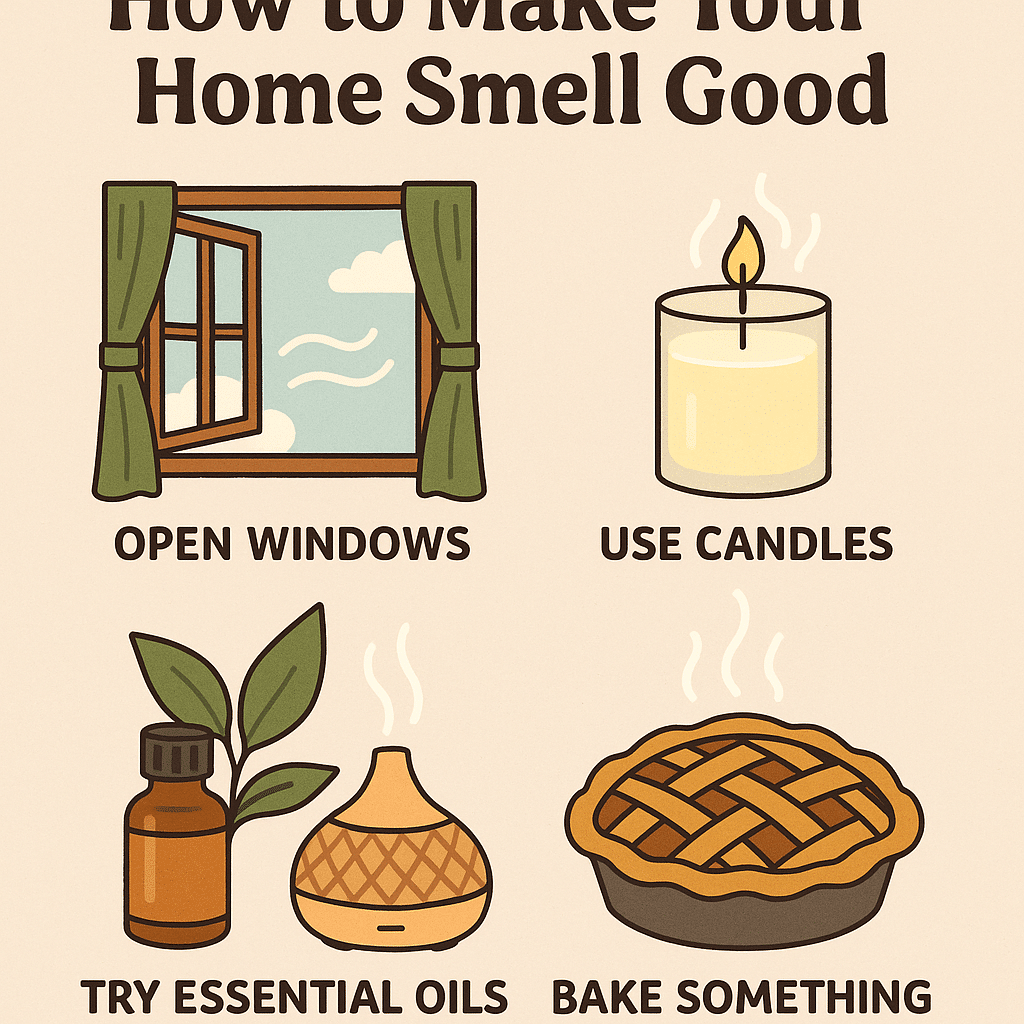
Here’s the honest answer to how to make your house smell good: first find and remove whatever is making the bad smell, then let fresh air in, and only then add a scent you love. Candles and sprays can’t beat a damp towel pile or a sour trash can. They just sit on top of it.
So this guide works in that order. You’ll get a smell detective chart, 15 tried-and-true ways to make your home smell good (most are free or under $5), three simmer pot recipes, a table showing how long each method lasts, and the safety and pet notes most guides skip.
🏡 Quick Answer: How Do You Make Your House Smell Good?
- Find the source: trash, drains, damp towels, pet bedding, the fridge or the HVAC filter.
- Clean and dry it: wash fabrics, clean the bin and disposal, keep humidity between 30% and 50%.
- Air it out: open windows on opposite sides for 5–10 minutes a day.
- Absorb what’s left: baking soda, activated charcoal or bamboo charcoal bags.
- Add a scent last: a simmer pot, reed diffuser or candle. Pick one main scent per room.
In this guide
Find the Smell First: Odor Source Finder
Before you buy anything, walk through your home with a “fresh nose.” Step outside for two minutes, then come back in and notice the first thing you smell. Your nose gets used to your own home fast, so that first breath is your most honest test. The U.S. EPA says that for most indoor air problems, removing the source is the most effective fix. In other words, find it before you cover it.
| If it smells… | Likely cause | What to do |
|---|---|---|
| 🌧️ Musty, damp, “old basement” | High humidity, mildew, wet towels or a slow leak | Dry it out: fans, a dehumidifier, wash towels, look for leaks |
| 🚽 Sewer smell in a bathroom | A dry drain trap in a sink, tub or floor drain you rarely use | Run water for 30 seconds in every drain once a week |
| ⚠️ Rotten eggs near a gas stove, furnace or water heater | Possible natural gas leak | Don’t light anything or flip switches. Leave, then call your gas company or 911 from outside |
| 🍳 Sour kitchen smell | Trash can, garbage disposal, sink sponge, fridge | Wash the bin, clean the disposal, replace the sponge, clear old food |
| 🐾 “Doggy” or litter smell | Pet beds, litter box, rugs, sofa fabric | Wash pet bedding weekly, scoop daily, vacuum fabric |
| 💨 Stale, stuffy air everywhere | Closed-up rooms, dusty HVAC filter | Air out daily, check and change the furnace or AC filter |
Our quick-reference chart. Gas safety is the one smell you never try to fix yourself.
Here’s a real-life example. Jen kept lighting a vanilla candle in her hallway because it “smelled like a basement.” The smell always came back by evening. The cause turned out to be a guest-bathroom tub nobody used, whose drain trap had dried out and let sewer gas through. One bucket of water fixed what three candles couldn’t. That’s why the source comes first.
Ways 1–5: Remove Bad Odors (the Clean Slate)
These five steps take care of most everyday smells. Do them once properly, then keep up with them weekly, and the scents you add later will smell clean instead of muddled.
1. Empty and wash the trash can (and the disposal)
Take the trash out often and use bags that tie shut. Once a month, wash the empty can with hot soapy water and let it dry in the sun. Sprinkle a tablespoon of baking soda in the bottom before the next bag goes in. While you’re in the kitchen, run the garbage disposal with cold water and a handful of ice and lemon peel, and swap out the sink sponge, which is often the hidden source of that sour smell.
2. Wash the fabrics that trap smells
Fabric holds onto cooking, smoke and pet smells longer than any hard surface. Wash sheets and pillowcases every week, and throw blankets, dish towels, bath mats and pet beds in the wash often too. Don’t let damp towels sit in a pile; hang them to dry. A detergent with a scent you love helps the whole house, and our guide to the best smelling laundry detergents can point you to a few.
3. Deodorize carpets, rugs and the sofa
Vacuum carpets and upholstery every week to pull out the dust, dander and crumbs that make a room smell stale. For an extra boost, sprinkle baking soda over the carpet, leave it for 15 to 30 minutes (overnight for pet areas), then vacuum it up. If a rug still smells after that, it needs a proper wash, and our step-by-step guide on how to clean carpet without a machine walks you through it.
4. Dry out damp, musty spots
A musty smell nearly always means moisture. The EPA’s guide to mold and moisture recommends keeping indoor humidity below 60%, ideally between 30% and 50%, and notes you may have hidden mold if a building smells moldy but you can’t see it. A $10 humidity meter tells you where you stand. Run the bathroom fan during showers and for a while after, run the kitchen hood while you cook, and use a dehumidifier in a damp basement. Not sure which machine you need? See our comparison of an air purifier vs humidifier vs dehumidifier.
5. Check the HVAC filter and the fridge
A dusty furnace or AC filter blows a faint stale smell into every room. Pull it out, look at it, and replace it when it’s gray or clogged, following the timing printed on the filter. Then clear the fridge: toss old leftovers, wipe the shelves, and put an open box of baking soda at the back. Replace that box about once a month so it keeps working.
Now that your home has a clean base, it’s time for the fun part: adding smells you actually want.
Ways 6–10: How to Make Your House Smell Good Naturally
You don’t need to buy much for a lovely-smelling home. These natural methods use fresh air, kitchen staples and plants, and they cost next to nothing.
6. Open the windows (yes, even in winter)
Fresh air is the cheapest air freshener there is. The EPA suggests bringing in outdoor air by opening windows and doors, running window or attic fans when the weather allows, and using bathroom and kitchen fans that vent outside, especially while you cook or clean. Open windows on opposite sides of the house for 5 to 10 minutes to get a cross-breeze. In January, that short burst still swaps out stale air without chilling the whole house.
7. Make a stovetop simmer pot
This is the trick that makes a whole house smell good in about 15 minutes. Fill a pot with 3 to 4 cups of water, add fruit, spices or herbs, bring it to a boil, then turn it down to the lowest simmer. The steam carries the scent through every room. Try one of these:
| Recipe | What goes in | Best for |
|---|---|---|
| 🍋 Fresh & clean | 1 sliced lemon, 3 sprigs rosemary, 1 tsp vanilla extract | Spring, after cleaning, before guests |
| 🍊 Cozy fall | 1 sliced orange, 2 cinnamon sticks, 1 tbsp whole cloves, 1 sliced apple | Fall evenings, open houses |
| 🎄 Holiday | 1 handful cranberries, 1 sliced orange, 2 cinnamon sticks, 2–3 pine or fir sprigs | December, holiday parties |
Top up the water every 30 minutes or so, and turn the stove off when you leave the house or go to bed.
Say friends are coming over at 7. Start the “cozy fall” pot at 6:30, set a phone timer to check the water, and by the time the doorbell rings the whole downstairs smells like apple pie. You haven’t baked a thing.
8. Mix a DIY room and linen spray
Combine 2 cups of water and 1 tablespoon of baking soda in a spray bottle, then add 10 to 15 drops of an essential oil such as lavender, sweet orange or eucalyptus. Shake before each use. The baking soda helps with odors and the oil adds the scent. Mist curtains, couch cushions and the air (test fabric in a hidden spot first). Popular pairs: lavender with vanilla for calm, lemon with peppermint for an energizing clean smell. If you have cats or dogs, read the pet notes in the safety section before choosing an oil.
9. Use dried herbs, flowers and sachets
Small cloth bags of dried lavender tucked in drawers and closets give a soft scent for months. Hang a bundle of fresh eucalyptus from the showerhead and the steam turns your bathroom into a mini spa. A vase of fresh flowers, a bowl of potpourri, or a few bars of nicely scented soap in the linen closet all add gentle background fragrance that never overwhelms.
10. Bake, brew or grow something
Real food smells are hard to beat. A tray of cookies, a loaf of bread or a pot of fresh coffee makes a house smell like a home, which is why people selling a house often bake before an open house. Houseplants help the air feel fresher too, though they won’t perfume a room on their own. Fragrant herbs like mint, basil and rosemary on a sunny windowsill smell great every time you brush them. Our list of the best indoor plants for clean air has easy-care picks.
Ways 11–15: How to Keep Your House Smelling Good All the Time
Natural tricks are lovely, but most fade within hours. If you want your home to smell good all day without thinking about it, these are the long-lasting options.
11. Odor absorbers: baking soda, charcoal and volcanic rock
Absorbers don’t add a scent; they quietly pull smells out of the air. Bamboo or activated charcoal bags are porous and trap odor molecules, so they work well in closets, shoe racks, near the litter box and in cars. Many brands say you can “recharge” them by leaving them in direct sunlight once a month, and they last up to about two years. Bags of volcanic rock work the same way and are popular for smoke and pet smells. These are the best pick if anyone at home is sensitive to fragrance.
12. Reed diffusers
A bottle of scented oil with rattan reeds works 24 hours a day with no flame and no power. A good one can last around three months, and you can flip the reeds every week or two for a stronger burst. They’re perfect for guest bathrooms, entryways and anywhere you’d forget to light a candle. Bonus: a nice glass bottle doubles as decor.
13. Scented candles and wax melts
Candles give scent and a cozy glow at the same time. Clean, fresh scents (cotton, linen, citrus) suit kitchens and living rooms, while vanilla, sandalwood and lavender suit evenings. Trim the wick to about 1/4 inch before each burn, and on the first burn let the wax melt all the way to the edge so the candle doesn’t tunnel. Want the scent without a flame? A wax warmer melts scented wax cubes with gentle heat, which is a safer choice around kids and pets.
14. Plug-ins and essential oil diffusers
Plug-in air fresheners slowly warm a scented oil and keep hallways and bathrooms smelling consistent for weeks per refill. Place them in open spots, not behind furniture, so the scent can move. Ultrasonic diffusers mix water with a few drops of essential oil and send out a fine mist, which lets you change scents by mood or season (pine in December, citrus in summer, cinnamon in fall). Nebulizing diffusers use pure oil for a stronger scent, and smart diffusers let you schedule scent from your phone. Clean any water diffuser regularly with a little vinegar and water so it doesn’t start smelling stale itself.
15. Quick-fix odor sprays and scent layering
For a sudden smell (burnt toast, a pet accident), an odor-eliminating spray that’s designed to neutralize odors, not just perfume them, is handy to keep under the sink. For everyday freshness, think in “scent zones”: one main scent per area, with gentle versions of the same family. Citrus in the kitchen, lavender in the bedroom and a soft vanilla or woody scent in the living room work well together. Five different strong scents at once just smell confusing.
Which Method Lasts Longest? Comparison Table
Not sure where to start? This table puts the popular options side by side so you can match the method to your budget and how much effort you want to put in.
| Method | How long it lasts | Typical cost | Best for |
|---|---|---|---|
| 💨 Open windows | Minutes, then repeat daily | Free | Every room, every day |
| 🍊 Simmer pot | While simmering | Under $3 | Guests, holidays, quick whole-house scent |
| 🧴 DIY room or linen spray | 1–3 hours | Under $5 | Fabrics, a quick refresh |
| 🧂 Baking soda box | About 1 month | About $1–$2 | Fridge, closets, trash cans |
| 🕯️ Scented candle | While lit | $10–$30 | Evenings, cozy rooms |
| 🔌 Plug-in | Weeks per refill | $5–$10 per refill | Hallways, bathrooms |
| 🎋 Reed diffuser | Up to about 3 months | $15–$40 | Guest bath, entry, offices |
| ⚫ Charcoal bags | Up to about 2 years (recharged) | $10–$20 | Closets, shoes, pets, fragrance-free homes |
Our estimates from product labels and typical US store prices, checked November 2026. Times vary with room size, heat and airflow.
Our pick for most homes? Fix the sources, open windows daily, keep charcoal bags in the smelly spots, and add one reed diffuser near the front door. That combo costs under $50 and keeps working while you sleep.
Room-by-Room Plan for a Home That Always Smells Fresh
Each room has its own usual suspects. Here’s the routine we’d follow in each one.
- Kitchen: clean the disposal and wash the bin weekly, run the hood while cooking, simmer lemon and rosemary after strong meals. Don’t forget the dishwasher filter, too; our guide on how to clean a dishwasher shows how.
- Bathroom: run the fan during and after showers, wash towels and bath mats often, run water in unused drains weekly, and keep a reed diffuser on the shelf.
- Bedroom: wash sheets weekly, air the room every morning, tuck a lavender sachet in a drawer. Skip candles at bedtime.
- Living room: vacuum the sofa and rugs, wash throws, and use a candle only while you’re in the room.
- Entryway: keep shoes on a rack with a charcoal bag, and put your “signature” scent here, since it’s the first thing guests notice.
- Pet areas: wash pet beds weekly, scoop the litter box daily, and use odor absorbers instead of strong oils.
Want to turn this into a habit? Our full cleaning checklist for home covers the spots most people forget, and many of them are exactly where smells hide.
Safety: Candles, Essential Oils, Pets and Kids
Home fragrance should make your home nicer, not riskier. Two areas deserve real care.
Candles. According to NFPA data shared by the Seattle Fire Department, candles started an average of about 7,400 U.S. home fires a year from 2015 to 2019, and three in five of those fires began when something that could burn was too close to the candle. Keep candles at least 12 inches from anything flammable, use a sturdy holder, and blow them out before you leave the room or go to sleep. Flameless candles are a great swap in bedrooms.
Essential oils and pets. Cats are especially at risk because they lack a liver enzyme that helps break down essential oils, according to the Pet Poison Helpline. Oils it lists as poisonous to cats include tea tree, eucalyptus, peppermint, cinnamon, clove, pine, wintergreen, ylang ylang and citrus. Active diffusers (ultrasonic and nebulizing) release tiny droplets that can land on fur and get licked off during grooming. Texas A&M’s vet school lists watery eyes and nose, drooling, vomiting and trouble breathing as signs to watch for.
- With cats, skip oil diffusers and use odor absorbers, open windows and simmer pots instead. Ask your vet before using any oil around pets.
- If a pet has breathing trouble, move it to fresh air right away and call your vet, the Pet Poison Helpline (855-764-7661) or the ASPCA Animal Poison Control Center (888-426-4435).
- Keep candles, wax warmers and oil bottles out of reach of kids and pets.
- Never leave a simmer pot or candle going when you leave home or go to bed.
- If anyone in the house has asthma or allergies, go light on fragrance and lean on fresh air and absorbers.
Got a dog or cat and want a home that’s stylish and easy to keep fresh? Our pet-friendly home decor ideas include washable fabrics that make odor control much easier.
Mistakes to Avoid
- Covering a smell instead of fixing it. Fragrance plus a bad odor equals a worse odor. Find the source first.
- Too many scents at once. A plug-in, a candle and a spray in one room fight each other. Pick one main scent per space.
- Ignoring humidity. No candle can beat a musty basement. Dry air first.
- Strong candles while cooking. Let the food smell take the lead during dinner and light the candle afterward.
- Forgetting your diffuser needs cleaning. Old water and oil residue start to smell stale.
- Using oils around cats without checking. Some popular scents are toxic to them.
✅ Weekly Fresh-Home Checklist
- ☐ Trash out, bin and disposal cleaned
- ☐ Sheets, towels and pet beds washed
- ☐ Carpets and sofa vacuumed
- ☐ Windows opened for 5–10 minutes a day
- ☐ Unused drains run for 30 seconds
- ☐ Fridge cleared of old food
- ☐ One scent per room, candles never left alone
Frequently Asked Questions
How can I make my house smell good all the time?
Remove odor sources weekly (trash, fabrics, drains, pet bedding), keep humidity between 30% and 50%, air the house out daily, and use a long-lasting scent such as a reed diffuser or a plug-in, plus charcoal bags in smelly spots.
How do I make my house smell good naturally?
Open windows for a cross-breeze, simmer citrus, spices or herbs on the stove, use baking soda to absorb odors, and add dried lavender sachets, fresh flowers or herbs. Baking or brewing coffee also fills a home with a natural, welcoming smell.
Why does my house smell musty, and how do I fix it?
A musty smell usually means too much moisture. Check for leaks, wet towels or a damp basement, run bathroom and kitchen fans, and use a dehumidifier to keep humidity under 50%. If it smells moldy but you can’t see mold, look for a hidden source.
How do realtors make a house smell good for showings?
They clean deeply, air the house out, and use light, simple scents like baked goods, a simmer pot, fresh flowers or a clean citrus scent. Strong perfumes can make buyers wonder what’s being covered up.
Are essential oil diffusers safe for pets?
Use caution. Cats are especially sensitive, and oils such as tea tree, eucalyptus, peppermint, citrus and pine can poison them. With pets at home, talk to your vet first and choose odor absorbers or fresh air instead.
What is the best thing to make a house smell good fast?
A stovetop simmer pot with citrus and cinnamon fills a whole house in about 15 minutes. For an instant fix in one room, open a window and use an odor-neutralizing spray.
How to Make Your House Smell Good: The Bottom Line
A home that smells good isn’t about the most expensive candle. It’s about a clean base: no hidden trash smells, dry air, fresh fabrics and a daily dose of outside air. Once that’s in place, one simple scent per room, from a simmer pot on Sunday to a reed diffuser by the door, makes the whole house feel welcoming.
Start tonight with the 5-minute fresh-nose test. Step outside, come back in, and follow your nose to the first thing you notice. Fix that one thing this weekend, and you’ll smell the difference by Monday.
Keep learning: more fresh-home guides from Dream Home Heaven
- How to clean carpet without a machine (easy DIY guide)
- Air purifier vs humidifier vs dehumidifier: which do you need?
- Round coffee table decor ideas (where a candle or diffuser looks best)
Sources: U.S. EPA, Improving Indoor Air Quality and A Brief Guide to Mold, Moisture and Your Home; Seattle Fire Department (NFPA candle fire data, 2015–2019); Pet Poison Helpline, Updates on Essential Oils; Texas A&M School of Veterinary Medicine. Prices are typical U.S. store prices. Checked November 2026.
What’s your favorite way to make your home smell good? Share your go-to scent or simmer pot combo in the comments.