
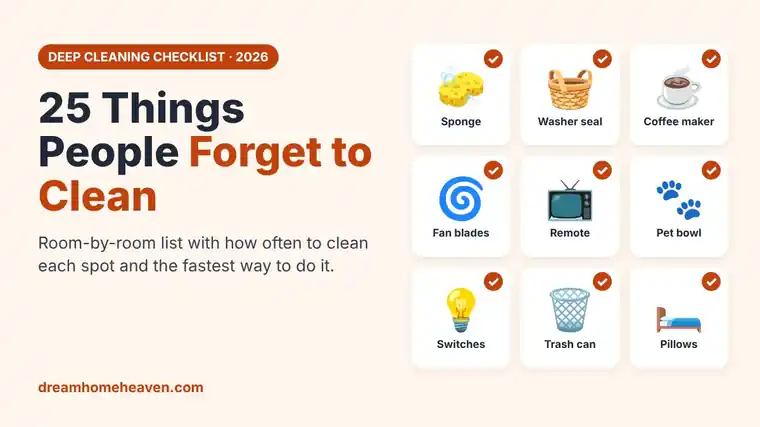
The things people forget to clean are usually the ones they touch every day: the kitchen sponge, faucet handles, light switches, the remote, the toothbrush holder and the pet bowl. Add the spots you never see, like the washing machine seal, the dryer vent, the fridge coils and the space behind the stove, and you have the real deep cleaning checklist most homes are missing.
Below is the full list of 25, room by room, with how often to clean each one and the quickest way to do it. There’s also a printable-style calendar so nothing slips for more than a few weeks.
🧽 Quick Answer: Things People Forget to Clean
- Germiest: kitchen sponge, sink, toothbrush holder, pet bowl and coffee maker reservoir (NSF germ study).
- Most-touched: light switches, door handles, faucet handles, remotes and phones.
- Hidden: washer gasket, dishwasher filter, fridge coils, range hood filter, behind appliances.
- Safety: dryer lint trap every load and the dryer vent at least once a year.
- Rule of thumb: high-touch spots weekly, hidden spots monthly, big jobs every 3–12 months.
In this guide
Why the Things People Forget to Clean Matter
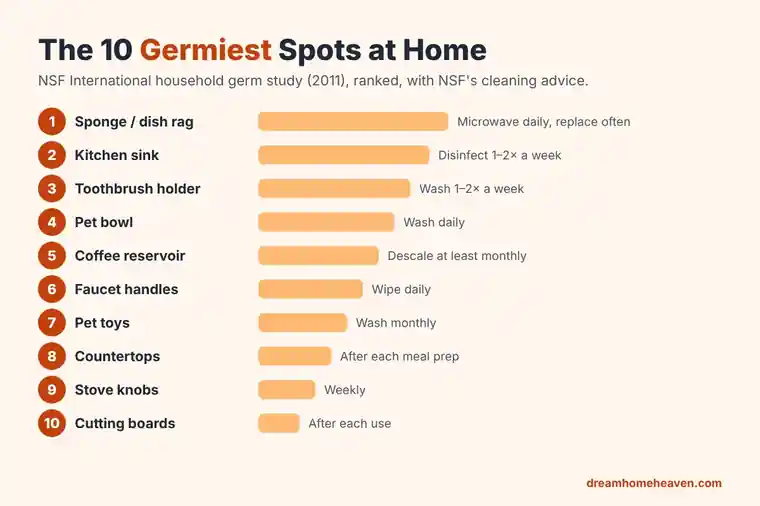
Forgotten spots matter because they collect germs, odors and dust right where your hands and food go. In a household germ study, NSF International had 22 families swab 30 everyday items. The kitchen sponge or dish rag came out as the germiest item, followed by the kitchen sink, toothbrush holder, pet bowl and coffee maker reservoir. Countertops had coliform bacteria in 30 percent of the homes tested.
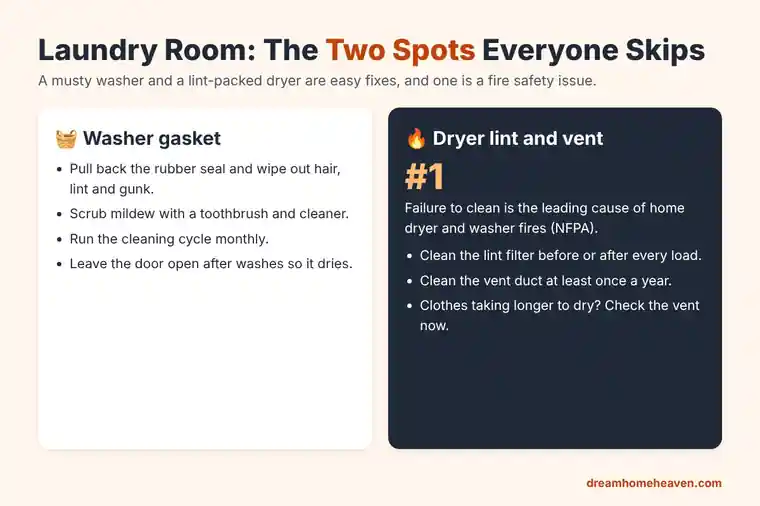
Some of these spots are also a safety issue. Albuquerque Fire Rescue, citing NFPA figures, reports that failure to clean was the leading cause of home dryer and washer fires, at 32 percent. And dust that builds up on fan blades, pillows and blinds feeds dust mites, one of the common indoor allergens the American Academy of Allergy, Asthma & Immunology describes.
So where do you start? With the room where germs and food meet: the kitchen.
Kitchen: 9 Things People Forget to Clean
The kitchen holds more forgotten spots than any other room, and most of them sit within arm’s reach of your food. Work through these in one evening and then keep them on a simple rotation.
1. Kitchen sponge and dish rag
NSF suggests putting a wet sponge in the microwave for two minutes once a day and replacing it often, about every two weeks or sooner. Dish rags go in a hot wash every few days. If a sponge smells, it’s past saving.
2. Sink, drain and sink stopper
NSF recommends washing and disinfecting the sink once or twice a week and sanitizing drains monthly. Pull out the stopper or strainer, scrub off the grime with a brush and hot soapy water, then disinfect it. Fighting rust rings or hard water marks on a utility sink? Here’s how to remove stains from a fiberglass sink without scratching it.
3. Dishwasher filter
If your dishes come out with a film or a funky smell, the filter is the usual suspect. Most can be twisted out from the bottom of the tub, rinsed and scrubbed with a soft brush about once a month; check your manual for yours.

For the full routine with vinegar and baking soda cycles, see our step-by-step guide on how to clean a dishwasher.
4. Refrigerator coils and door gasket
The coils at the back or underneath your fridge collect dust and pet hair, which makes the fridge work harder. Unplug it, vacuum the coils with a brush attachment or a coil brush a couple of times a year, then plug it back in. While you’re there, wipe the rubber door gasket; crumbs and spills hide in the folds.
5. Range hood filter
A greasy hood filter pulls less smoke and can drip grease. Most metal filters pop out and can soak in very hot water with dish soap and a little baking soda, then get a gentle scrub. Once a month is a good target if you cook most nights.
6. Coffee maker reservoir
NSF notes that most manufacturers recommend cleaning every 40 to 80 brew cycles, or at least monthly. For many drip machines that means running a 50/50 mix of water and white vinegar through a cycle, then two or three cycles of plain water. Wash the basket and carafe too. Check your machine’s manual first, since some brands want their own descaler.
7. Stove knobs
You touch them with raw-chicken hands and forget them for months. NSF suggests weekly cleaning. Many knobs pull straight off; soak them in hot soapy water while you wipe behind them.
8. Pot and pan handles
We scrub the inside and forget the handle, where greasy fingerprints build up. A degreasing dish soap and a scrub brush handle most of it. Wooden handles prefer a damp cloth, not a soak.
9. Garbage can
A dirty bin keeps smelling even with a fresh bag. Every few months, take it outside, hose it out, scrub it with hot water and dish soap, and let it dry in the sun. Sprinkle a little baking soda in the bottom before the new bag goes in. If the kitchen still smells, our guide on how to make your house smell good walks through the other usual culprits.
Bathroom: 6 Spots That Get Missed
Now that the kitchen is done, let’s move to the bathroom, where moisture lets mold and mildew grow in spots most people never look at.
10. Toothbrush holder
It was the third germiest item in the NSF study, and it’s easy to see why: drips collect in the bottom and never dry. NSF suggests cleaning it once or twice a week. Many holders are dishwasher-safe; if not, scrub with hot soapy water and a bottle brush.
11. Toilet brush holder
Pour some disinfectant cleaner into the holder, let it sit for the time on the label, scrub, rinse with hot water and let it air-dry fully before the brush goes back. Once a month keeps it from turning into a puddle of grime.
12. Shower curtain liner
Soap scum and pink or black mildew build up along the bottom. Most plastic or fabric liners can go in the washing machine on a warm, gentle cycle with detergent, often with a couple of towels to help scrub. Hang it back up to dry. Every one to three months works for most showers.
13. Shower head
Weak, uneven spray usually means mineral buildup. Fill a plastic bag with white vinegar, slip it over the shower head, tie it with a rubber band and leave it for an hour or so, then run hot water. Check the finish first; some coated or brass fixtures don’t like long vinegar soaks.
14. Bathtub jets
Jetted tubs can hold old water and residue inside the pipes. Fill the tub with hot water above the jets, add a jet-tub cleaner or the cleaner your tub’s maker recommends, run the jets for 15 minutes, drain, then refill with clean water and run again to rinse. A few times a year is plenty for most tubs.
15. Faucet handles
You touch them with dirty hands so you can clean your hands. NSF suggests wiping faucet handles daily. Keep a pack of disinfecting wipes under the sink so it takes five seconds.
Living Room and Bedroom: 6 Spots People Skip
Here the problem is less about germs and more about dust and the things everyone in the house touches. Picture a family movie night: five people sharing one remote, a bowl of popcorn and the light switch on the way out. That’s why these spots are on the list.
16. Light switches and door handles
Wipe them weekly with a disinfecting wipe, and every day when someone in the house is sick. Spray cleaner onto a cloth, not onto the switch, so nothing drips behind the plate.
17. Remote controls, phones and keyboards
Take the batteries out of the remote, then wipe it with a cloth lightly dampened with isopropyl alcohol and use a toothpick or cotton swab around the buttons. For phones and laptops, follow the maker’s cleaning advice so you don’t damage the screen coating. Once a month is a good minimum.
18. Ceiling fan blades
Slide an old pillowcase over each blade and pull it back so the dust falls inside the case, not on your bed. Every few weeks during fan season keeps the dust from flying around the room the next time you switch it on.
19. Pillows and mattress
Pillowcases get washed; pillows rarely do. Most pillows can be machine-washed a few times a year, but check the care label first. Vacuum the mattress with an upholstery tool and rotate it when you do. Allergy-prone? Washing bedding often is one of the simplest ways to cut down on dust mites.
20. Baseboards and door frames
Run the vacuum’s brush tool along baseboards first, then wipe with a damp microfiber cloth. Don’t forget the tops of door frames; a quick swipe with a duster every few months is enough.
21. Blinds, curtains and window tracks
Dust blinds with a microfiber cloth or a sock on your hand, and wash or vacuum curtains once or twice a year. Window tracks collect dead bugs and grit; vacuum them, loosen the rest with an old toothbrush, then wipe.
If your bedroom needs more than a quick pass, our guide on how to deep clean your room goes top to bottom.
Laundry Room and the Rest of the House: 4 More Spots
The last group hides behind doors and under appliances, and one of them is the most important item on this whole list.
22. Washing machine gasket (door seal)
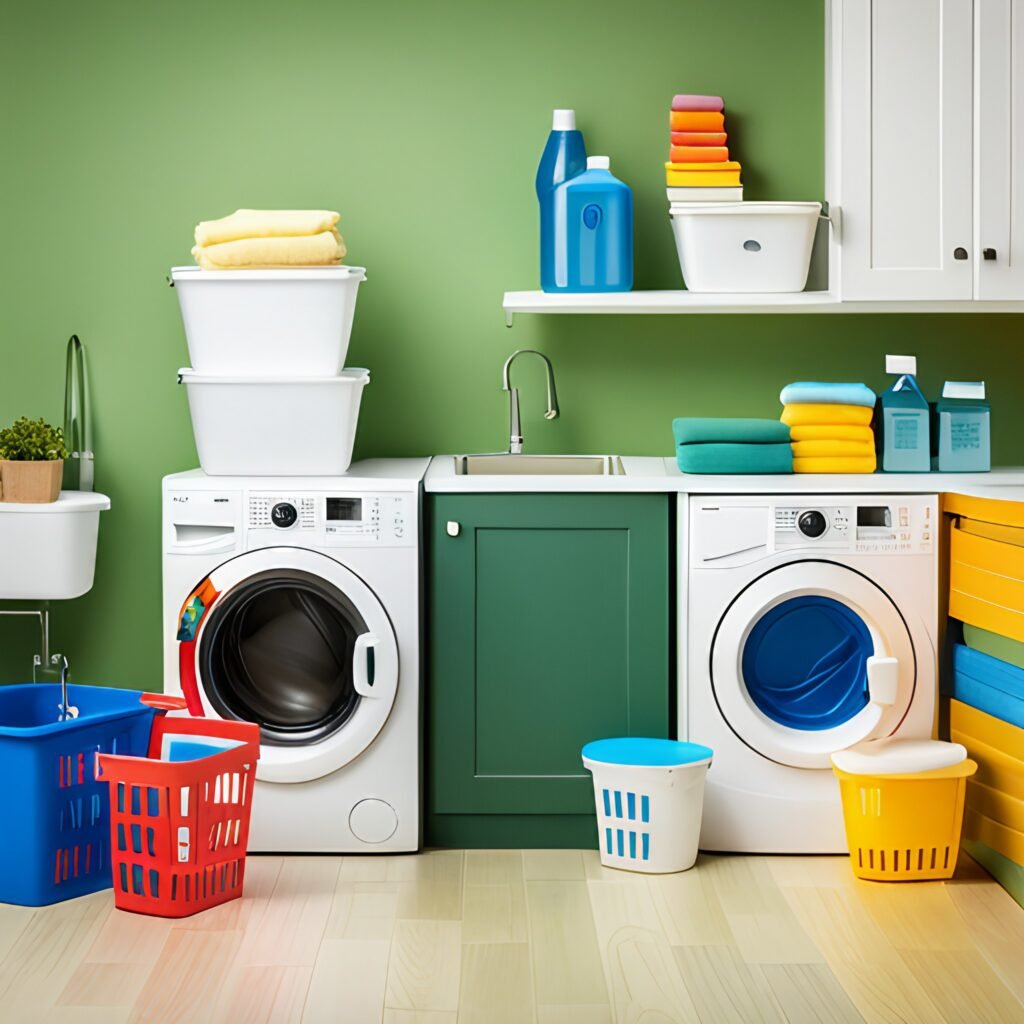
On front-loaders, water gets trapped in the rubber seal and mildew follows. Pull back the seal, wipe out hair, lint and gunk, then scrub any mildew with a cleaner and an old toothbrush. Run the machine’s cleaning cycle about once a month or as the manual says, and leave the door open between loads so it dries.
23. Dryer lint trap and vent
This one isn’t just about clean laundry. The NFPA’s dryer and washer safety tips say to clean the lint filter before or after each use, remove lint around the drum, and clean lint out of the vent pipe once a year, or more often if clothes are taking longer than normal to dry. Gas dryers should be inspected by a professional.
24. Behind and under large appliances
The space behind the stove, fridge and washer collects crumbs, dust and the occasional runaway sock, which attracts pests. Once or twice a year, carefully slide each appliance out (get help with the heavy ones), vacuum, then mop. Moving furniture too and found a dingy patch of carpet? Here’s how to clean carpet without a machine.
25. Pet bowls and pet toys
The pet bowl ranked fourth in the NSF study and pet toys seventh. NSF suggests washing bowls daily and toys monthly or more often. Stainless steel and ceramic bowls are easiest to keep clean; many go straight in the dishwasher.
Got a garage, too? It’s the biggest forgotten room in most homes. Our guide on how to organize a garage on a budget covers clearing it out and keeping it clean.
Deep Cleaning Checklist: How Often to Clean Each Forgotten Spot
Here’s the whole list in one table. Use it as your deep cleaning checklist: add the weekly items to your normal clean, and put the monthly and yearly ones on your calendar.
| Spot | How often | Quick method |
|---|---|---|
| 🧽 Kitchen sponge | Daily; replace every ~2 weeks | Wet, microwave 2 min |
| 🚰 Sink and drain | Sink 1–2× a week; drain monthly | Scrub, then disinfect |
| 🍽️ Dishwasher filter | Monthly | Twist out, rinse, soft brush |
| ❄️ Fridge coils and gasket | Coils 2× a year; gasket monthly | Unplug, vacuum coils |
| 🔥 Range hood filter | Monthly | Hot soapy soak |
| ☕ Coffee maker | Every 40–80 brews or monthly | Vinegar cycle, then water |
| 🎛️ Stove knobs | Weekly | Pull off, soak |
| 🍳 Pot and pan handles | Every wash | Degreasing soap |
| 🗑️ Garbage can | Every 3 months | Hose, scrub, sun-dry |
| 🪥 Toothbrush holder | 1–2× a week | Dishwasher or hot soapy water |
| 🚽 Toilet brush holder | Monthly | Disinfect, air-dry |
| 🚿 Shower liner | Every 1–3 months | Machine wash |
| 💧 Shower head | Every 1–3 months | Vinegar bag soak |
| 🛁 Bathtub jets | A few times a year | Run jets with cleaner |
| 🚰 Faucet handles | Daily | Disinfecting wipe |
| 💡 Switches and handles | Weekly | Wipe, spray on cloth |
| 📺 Remotes and phones | Monthly | Alcohol-dampened cloth |
| 🌀 Ceiling fan blades | Every few weeks in season | Pillowcase trick |
| 🛏️ Pillows and mattress | Pillows a few times a year; mattress 2× a year | Wash per label; vacuum |
| 🧹 Baseboards and frames | Every 3 months | Vacuum, damp wipe |
| 🪟 Blinds and window tracks | Every 3–12 months | Microfiber, toothbrush |
| 🧺 Washer gasket | Monthly | Wipe seal, run clean cycle |
| 🔥 Dryer lint and vent | Lint every load; vent yearly | Clear filter; clean duct |
| 📦 Behind appliances | 1–2× a year | Slide out, vacuum, mop |
| 🐾 Pet bowls and toys | Bowls daily; toys monthly | Dishwasher or hot water |
Frequencies for the sponge, sink, toothbrush holder, coffee maker, faucet handles, stove knobs and pet items follow NSF International’s advice. Dryer advice follows the NFPA. Other timings are practical starting points; always follow your appliance manuals.
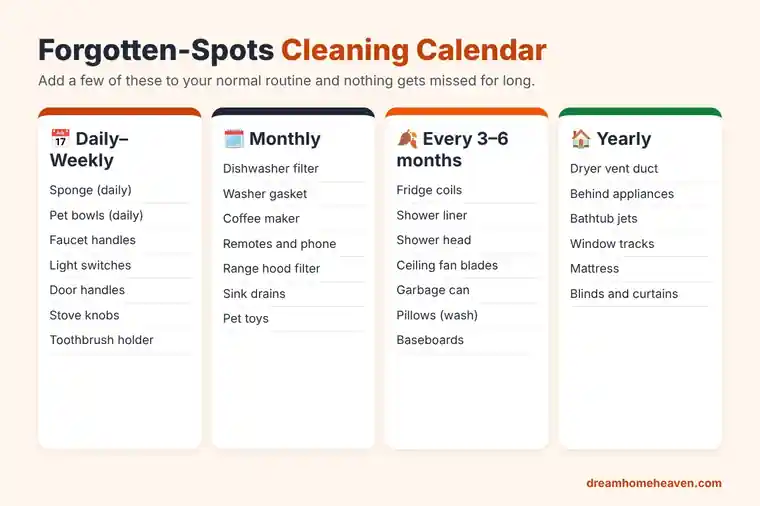
Here’s how it plays out in a real week. Say you already clean on Saturday mornings. Add a five-minute “touch points” pass (switches, handles, remotes, faucet handles) to that routine. On the first Saturday of the month, add the kitchen hidden five and the washer gasket. Each season, pick one big job, like the fridge coils in spring or the dryer vent in fall. Nothing on the list ever goes more than a few months.
Would you rather hand some of this off? If you’re in South Carolina’s Grand Strand, see what local pros charge in our guide to house cleaning rates per hour in Myrtle Beach.
Cleaning Mistakes to Avoid
- Mixing cleaners. Never mix bleach with vinegar, ammonia or other cleaners; it can release dangerous fumes. Use one product, rinse, then switch.
- Spraying electronics directly. Spray the cloth, not the remote, switch or screen.
- Keeping a sponge too long. Microwaving helps, but a sponge still needs replacing every couple of weeks.
- Skipping the manual. Coffee makers, dishwashers, jetted tubs and some fixtures have specific cleaning instructions; following them protects your warranty.
- Cleaning the lint filter but never the vent. The filter catches most lint, not all. The duct still needs a yearly clean.
- Trying to do all 25 in one day. You’ll burn out by number 9. Spread them out with the calendar above.
✅ This Week’s Forgotten-Spots Checklist
- ☐ Microwave or replace the kitchen sponge
- ☐ Disinfect the sink and faucet handles
- ☐ Wash the toothbrush holder
- ☐ Wipe light switches, door handles and remotes
- ☐ Wash the pet bowls
- ☐ Clean the dryer lint trap (every load)
- ☐ Pick one monthly job: dishwasher filter, washer gasket or coffee maker
Frequently Asked Questions
What are the most commonly forgotten things to clean?
High-touch spots like light switches, door handles, faucet handles, remotes and phones, plus hidden spots like the washing machine gasket, dishwasher filter, fridge coils, range hood filter, dryer vent and the area behind large appliances.
What is the germiest item in most homes?
In NSF International’s household germ study, the kitchen sponge or dish rag was the germiest item, followed by the kitchen sink, toothbrush holder, pet bowl and coffee maker reservoir.
What should be on a deep cleaning checklist?
Everything a normal clean skips: inside and behind appliances, appliance filters, fan blades, baseboards, blinds and window tracks, pillows and mattress, shower head and liner, washer gasket, dryer vent, and high-touch spots like switches and handles.
How often should you deep clean your house?
Most homes do well with a light weekly clean, a monthly pass on hidden spots like filters and gaskets, and a bigger deep clean of fans, coils, vents and behind appliances every 3 to 12 months.
How often should you clean the dryer vent?
The NFPA advises cleaning lint out of the dryer vent pipe once a year, or more often if clothes are taking longer than normal to dry. Clean the lint filter before or after every load.
How often should you replace a kitchen sponge?
NSF suggests microwaving a wet sponge for two minutes once a day and replacing it often, about every two weeks or sooner if it smells or falls apart.
Things People Forget to Clean: The Bottom Line
The things people forget to clean fall into two groups: what everyone touches every day, and what’s hidden behind a door, a filter or an appliance. Wipe the touch points weekly, handle the hidden spots monthly, and save the big jobs for once or twice a year. Keep the dryer vent on your calendar no matter what.
Start tonight with the easiest win: microwave or replace your kitchen sponge, then wipe the faucet handles. That’s two of the germiest spots in your home handled in under five minutes.
Keep learning: more cleaning guides from Dream Home Heaven
- How to clean a dishwasher: filter, vinegar and baking soda
- How to clean carpet without a machine
- How to make your house smell good: 15 easy ways
Sources: NSF International, household germ study; NFPA, Clothes Dryer and Washing Machine Safety (via U.S. Department of Energy); Albuquerque Fire Rescue, Dryers and Washing Machines; American Academy of Allergy, Asthma & Immunology, Indoor Allergens. Checked November 2026.
Which forgotten spot surprised you most? Tell us in the comments, along with any spot we missed.

Pingback: The Ultimate Guide to Removing Stains From Your Fiberglass Sink - Dream Home Heaven
Pingback: How to Organize Clothes at Home - Dream Home Heaven